Robotic Solar Cleaning Technology The Future of Efficient Solar Maintenance
August 24, 2026
Solar Cleaning Service: Smarter Robotic Solutions for Efficient Solar Panel Maintenance
September 1, 2026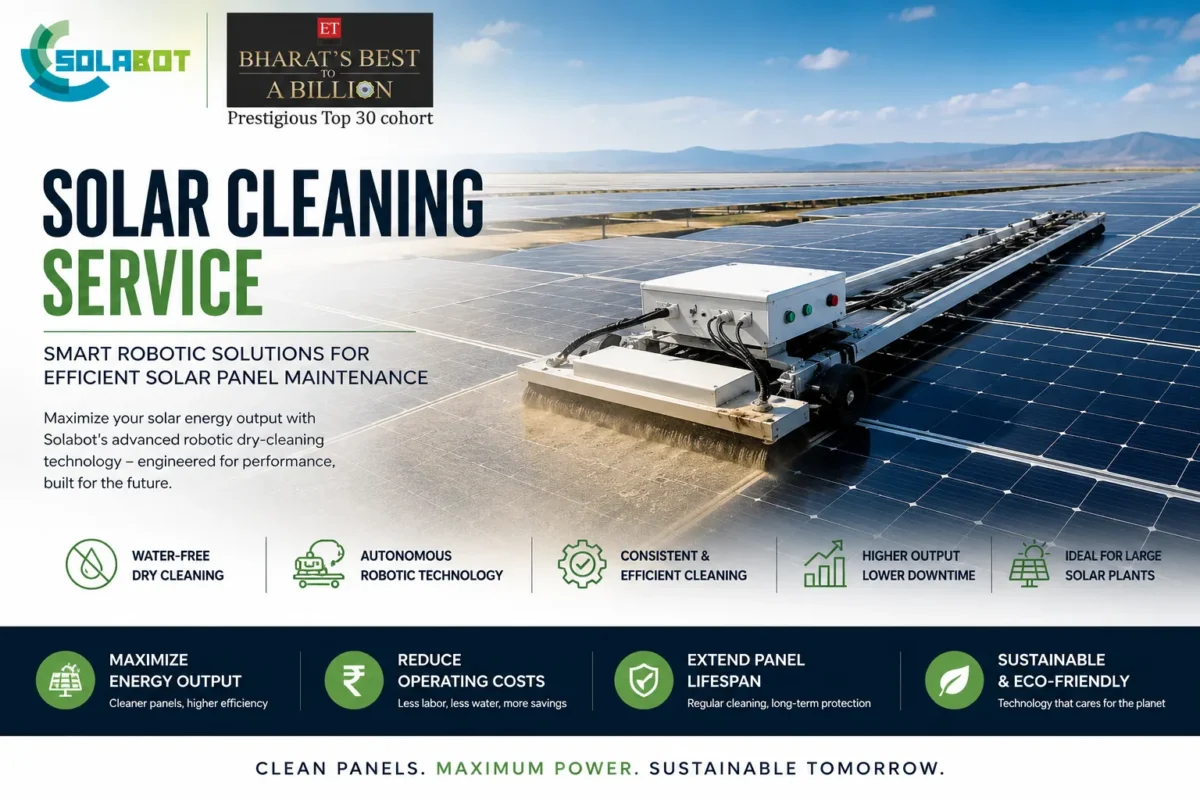
Why Solar Panel Cleaning Robots Matter for Large-Scale Solar Projects
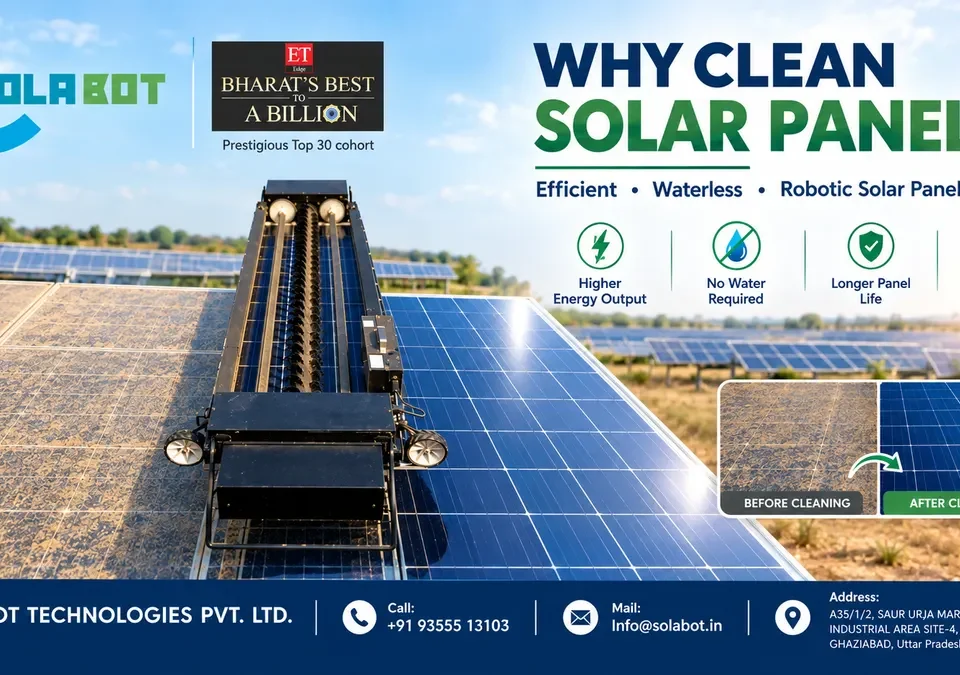
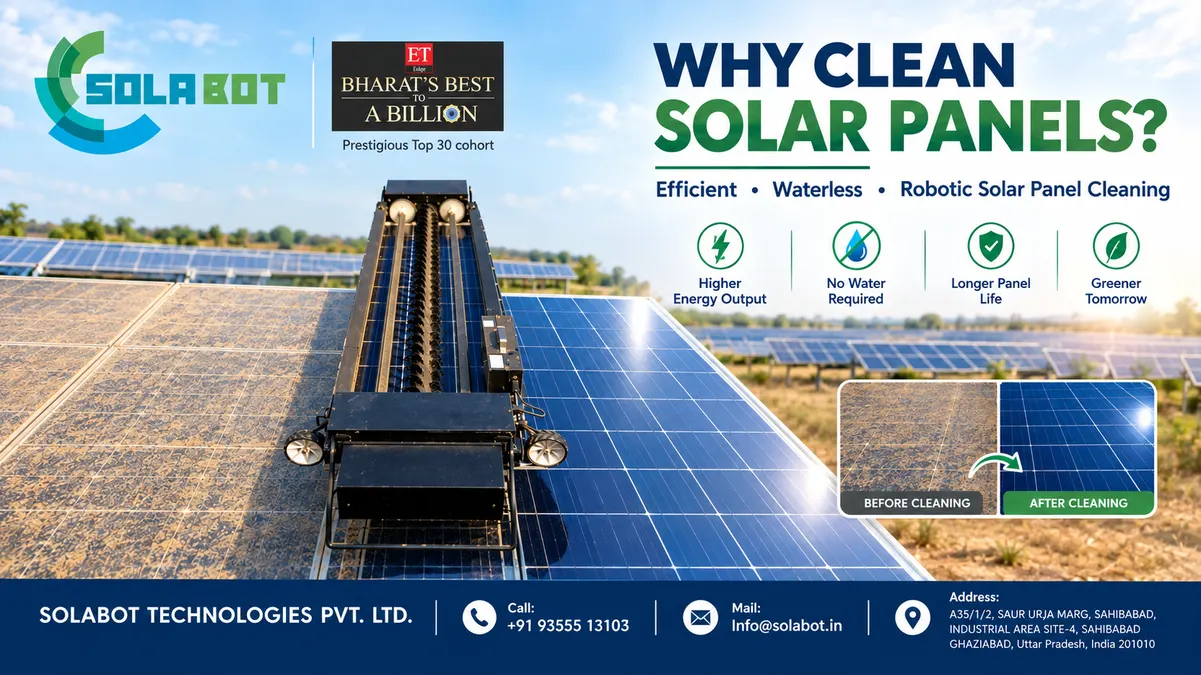
Solar Panel Cleaning Robot is becoming a key component of the global shift to cleaner, more sustainable energy. With the proliferation of solar farms and commercial installations and rooftop systems, the importance of keeping solar panels performing well is ever more important. Dust, dirt, sand, pollen, bird droppings and other contaminants can collect on the surface of photovoltaic modules, blocking sunlight from reaching the panel surface.
Conventional cleaning methods can be labor and time intensive, water intensive and require significant operational planning. This is where a solar cleaning robot can provide a more automated solution to the routine maintenance of solar panels.
Solabot Technologies Pvt. Ltd. specializes in robotic dry-cleaning solutions designed for different solar installation requirements. Its product portfolio includes fully automatic, semi-automatic, tracker-compatible, rooftop, docking, and centralized monitoring solutions.
What Is a Solar Cleaning Robot?
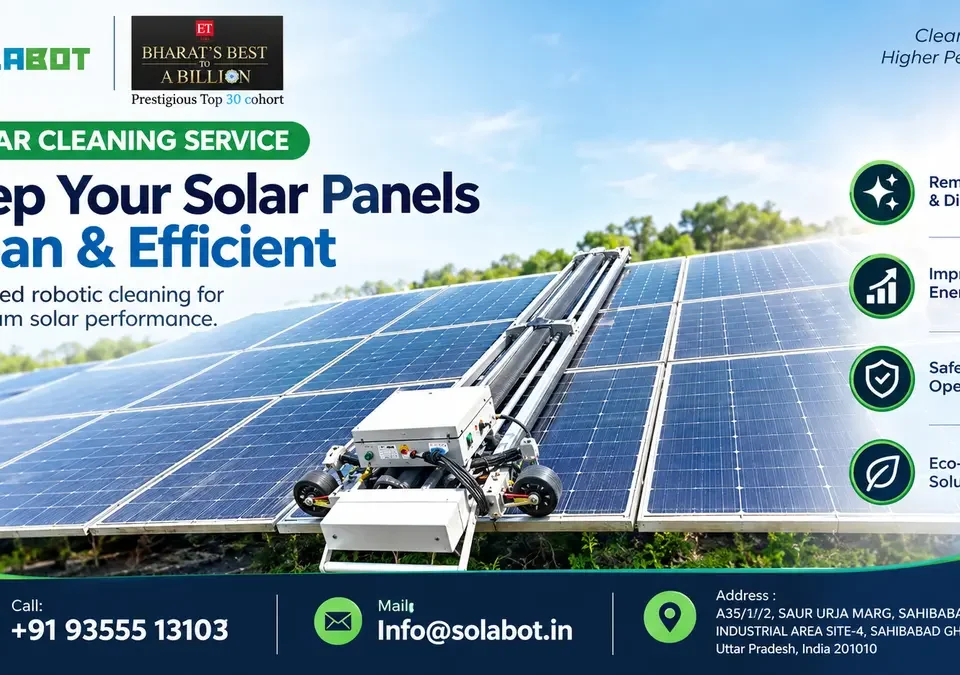
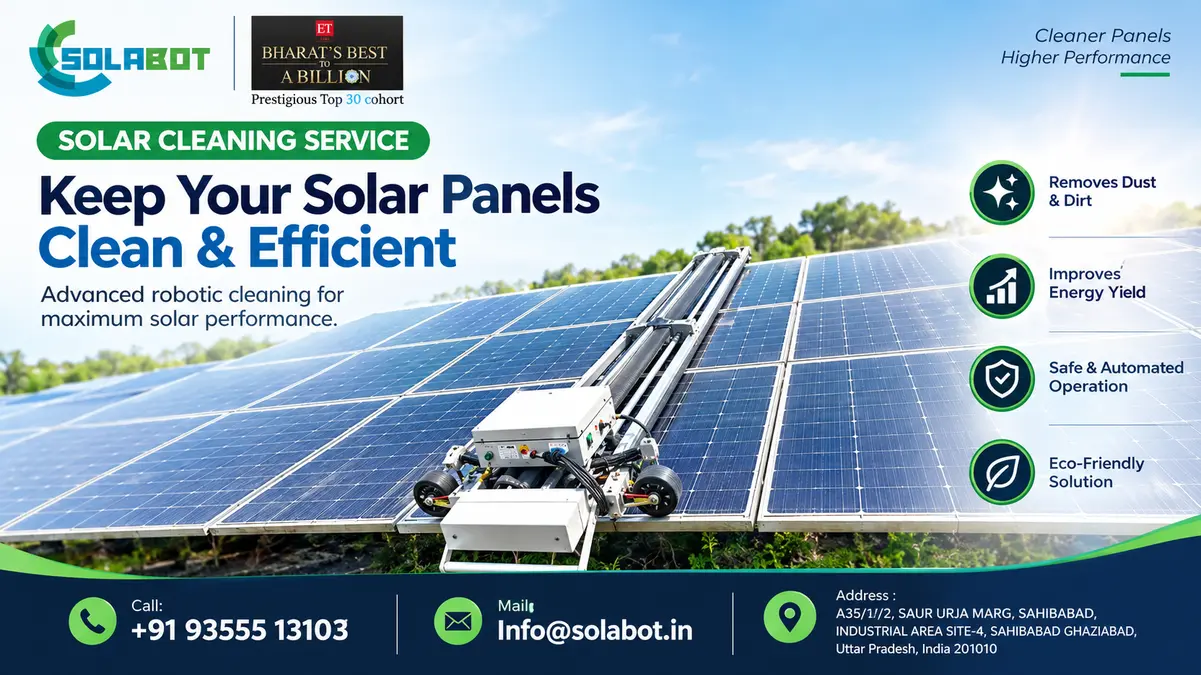
A solar cleaning robot is a semi-automated or automated device that is used to clean dust and loose contaminants off of solar panels. Depending on the system, the robot is able to move over the specified rows or panel surfaces and clean with special brushes or other cleaning mechanisms.
Dry robotic cleaning can reduce water consumption for routine cleaning compared to conventional water-based washing.
The real operation of robotic cleaning systems depends on the arrangement of panels, type of installation, site conditions and the degree of required automation.
Automation can cut down on manual labor for routine maintenance of panels in large solar farms and can help with repetitive cleaning jobs.
Why Is Solar Panel Cleaning Important?
Solar panels operate outdoors and are continuously exposed to environmental conditions. Over time, dust and other contaminants can settle on their surfaces.
Common contaminants include:
- Dust and sand
- Bird droppings
- Pollen
- Pollution
- Leaves and loose debris
- Industrial particles
- Other environmental contaminants
When contaminants build-up they can interfere with sunlight reaching the photovoltaic cells. Therefore, regular cleaning is an important part of the maintenance of the operating condition of a solar installation .
For a small rooftop installation, manual cleaning may be manageable. However, cleaning becomes considerably more challenging when a project contains hundreds or thousands of panels spread across a large area.
A solar cleaning robot can help automate this repetitive maintenance activity and make cleaning operations more consistent.
How Does a Solar Cleaning Robot Work?
The operating process varies between robotic systems, but a typical automated cleaning cycle can involve several stages.
- Robot Positioning
The robot is positioned according to the layout and configuration of the solar panels. Proper compatibility between the robot and the installation is important for safe and effective operation.
- Cleaning Operation
The robot moves along its designated cleaning path while its cleaning mechanism removes accumulated dust and loose contaminants from the panel surface.
- Automated or Manual Control
Different robots offer different levels of automation. Some systems can operate automatically, while others are designed for manual or semi-automatic control.
- Return and Charging
Advanced systems can return to a designated docking location after completing their cleaning cycle. Some Solabot solutions include self-charging capabilities designed to support repeated operation.
- Monitoring
For larger installations, centralized monitoring can provide operators with greater visibility into robot operation and cleaning activities. Solabot’s SB-SCADA solution provides centralized control, real-time monitoring, robot position tracking, and reporting features.
Benefits of Using a Solar Cleaning Robot
A solar cleaning robot can provide several operational advantages when appropriately matched to a solar installation.
Reduced Manual Cleaning
Solar projects that are large often need a lot of repetitive cleaning. Automation can greatly cut down the requirement for manual intervention in routine cleaning tasks. This allows the O&M teams to spend more time on critical activities like inspections, maintenance, troubleshooting and other important tasks.
Waterless or Dry Cleaning
n dry areas, solar plants can be a big question mark for water availability. Robotic dry-cleaning can decrease reliance on conventional water-based cleaning methods. Solabot is dedicated to developing waterless robotic cleaning solutions for routine solar panel maintenance while reducing reliance on water-intensive cleaning methods.
Solabot focuses on waterless robotic cleaning solutions designed to address routine solar panel maintenance while reducing reliance on water-intensive cleaning practices.
Consistent Cleaning
Automation allows operators to create consistent cleaning routines. Cleaning can be done routinely as part of the general operations and maintenance regime, instead of infrequent manual cleaning.
Suitable for Large Solar Projects
The benefits of automation become more significant as the number of solar modules increases. Large utility-scale projects can involve extensive panel rows, making manual cleaning a repetitive and resource-intensive activity.
Support for Sustainable Operations
In regions with scarce water resources, water dependency reduction can be an important factor for solar projects.
Solabot Solar Cleaning Robot Solutions
Solabot offers a range of robotic cleaning products to suit various solar installation needs. The product portfolio offers different configurations for different operational needs, instead of one robot for all applications.
SB-01 Fully Automatic Dry Cleaning Robot
The SB-01 is designed as a fully automatic dry-cleaning robot. According to Solabot, it can clean solar panel rows on a daily basis, rest at a dedicated docking station, and charge its batteries during non-cleaning periods. It can also be controlled and monitored through SCADA.This type of solution can be particularly relevant for projects seeking a higher level of cleaning automation.
SB-03 Semi-Automatic Dry Cleaning Robot
The SB-03 is a semi-automatic dry-cleaning robot designed for commissioned solar power plants. Solabot describes it as a plug-and-play system with manual control, portable battery operation, multi-row cleaning, and reduced manpower requirements.This can be useful for solar operators that want robotic cleaning while retaining a higher level of operator control.
SB-04T Tracker Dry Cleaning Robot
Solar panels installed on tracker systems have different movement characteristics compared with fixed installations. Solabot’s SB-04T is specifically designed for solar panels mounted on trackers and provides dry cleaning without conventional water washing. It also includes self-charging and SCADA monitoring capabilities.
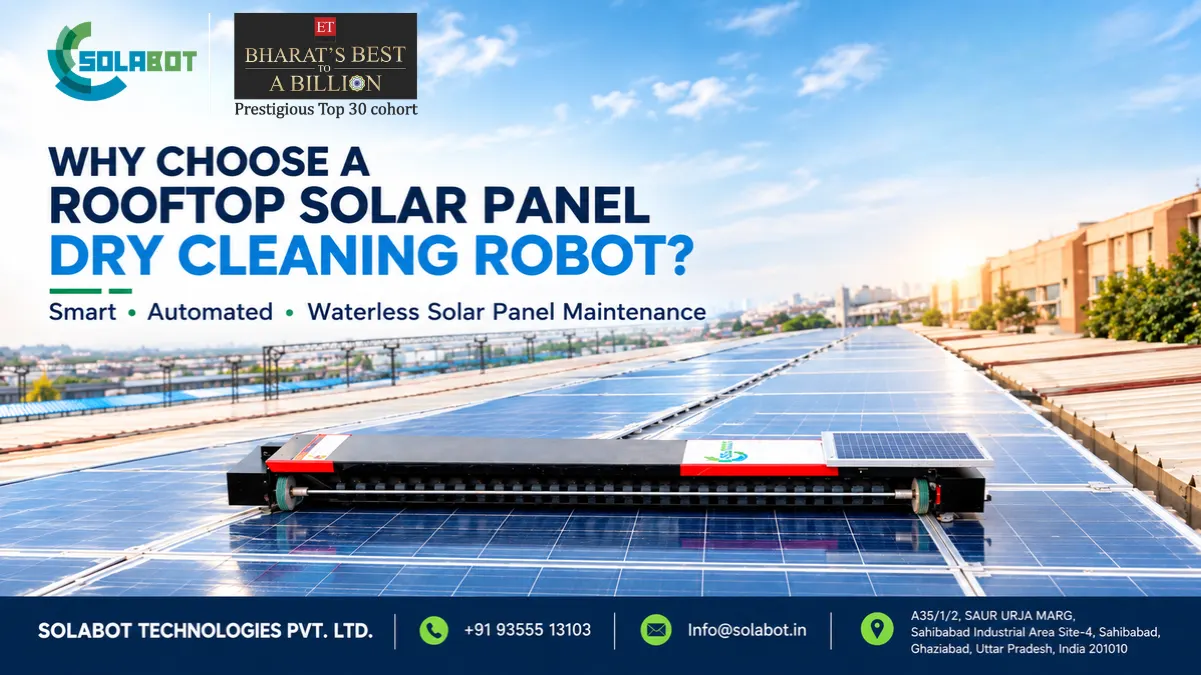
SB-RT Rooftop Cleaning Robot
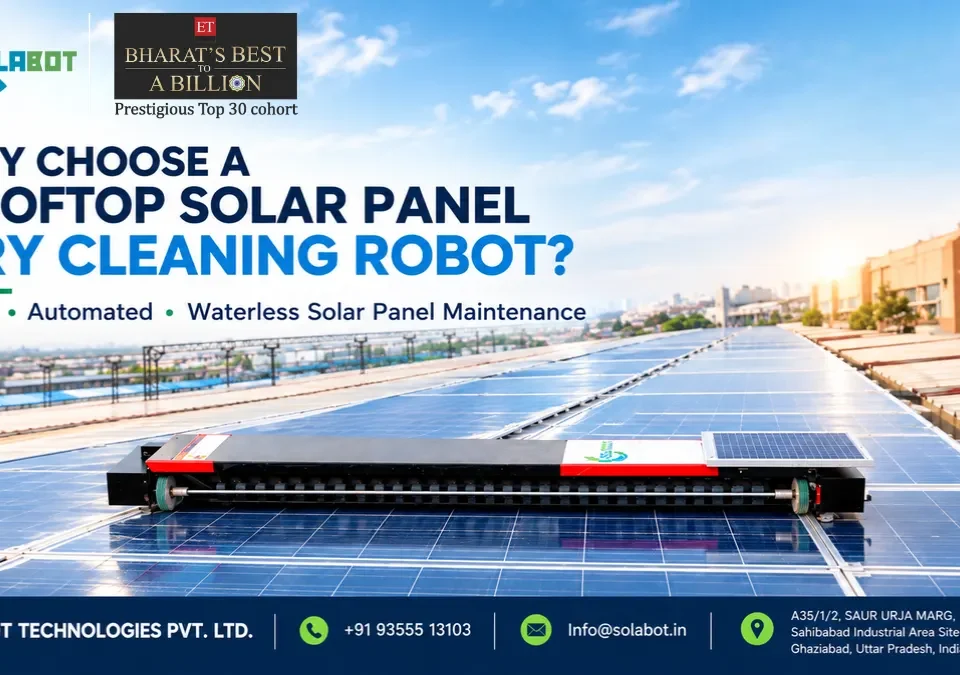
Rooftop solar installations have different space and access requirements from large ground-mounted solar farms. Solabot’s SB-RT is designed specifically for rooftop solar cleaning and includes features such as self-charging, reduced manpower operation, daily cleaning capability, alarms and reports, and self-decision-making for certain weather conditions.
Mobile Docking Station
A docking system can support automated robotic cleaning by providing a designated location for robot parking and charging. Solabot’s product range includes a Mobile Docking Station designed as part of its robotic solar cleaning ecosystem.
SB-SCADA Centralized Control
For larger solar projects, monitoring and control can become increasingly important. Solabot’s SB-SCADA solution provides centralized control, real-time monitoring, robot position tracking, and detailed reporting.
How to Choose the Right Solar Cleaning Robot
Not every solar installation has the same requirements. Before selecting a solar cleaning robot, project operators should evaluate several factors.
- Solar Panel Configuration
The robot should be compatible with the physical arrangement, dimensions, and configuration of the solar modules.
- Installation Type
A rooftop project may require a different solution from a utility-scale ground-mounted solar farm. Tracker installations can also require specialized equipment.
- Cleaning Frequency
The required cleaning frequency depends on local environmental conditions and the amount of dust or soiling experienced by the panels.
- Level of Automation
Operators should decide whether they need a manual, semi-automatic, or fully automatic cleaning solution.
- Water Availability
Projects located in water-stressed areas may benefit from dry or waterless cleaning technology.
- Monitoring Requirements
Large installations may benefit from centralized monitoring and control to improve operational visibility.
Why Choose Solabot?
Solabot Technologies focuses on robotic solar panel cleaning solutions and provides different technologies for different solar applications. Current portfolio includes SB-01, SB-03, SB-04T, Mobile Docking Station, SB-RT and SB-SCADA.
The company said it specializes in automatic dry-cleaning robotic solutions for solar panels installed in solar power plants and supports projects under construction as well as those that have already been commissioned. The website also shows deployments in multiple Indian states and a variety of solar projects.
This product diversity is useful for solar operators, because the most appropriate cleaning technology depends on the panel configuration of the site, project size, type of installation and operating goals.
The Future of Automated Solar Panel Cleaning
As solar installations become larger and operators continue looking for more efficient O&M practices, automation is likely to become increasingly important.
A solar cleaning robot can help transform panel cleaning from a heavily manual activity into a more structured and technology-driven maintenance process. Dry cleaning, automated movement, self-charging, docking, and centralized monitoring can work together to support more efficient solar O&M.
It is not only about replacing all manual activities. Automation of cleaning can help O&M teams get out of the loop of repetitive tasks and focus on work that requires human know-how.
Conclusion
Maintaining a solar installation involves a number of things such as keeping solar panels clean. Traditional cleaning methods can be effective for smaller projects, but a more automated approach can work for large solar farms, commercial installations, tracker systems and rooftops.
Another technology alternative to traditional dry cleaning is a solar-powered cleaning robot that needs less human intervention and less water. The right solution depends on the type of installation, panel configuration, cleaning needs, level of automation and monitoring needs.
Solabot Technologies Pvt. Ltd. provides a spectrum of robotic solar cleaning solutions for applications such as fully automatic cleaning, semi-automatic cleaning, tracker cleaning, rooftop cleaning, mobile docking and centralized SCADA monitoring.
Solabot is targeting solar developers, EPC companies, plant operators and O&M teams who want to explore robotic cleaning technology, and provide specialized solutions to make solar panel maintenance more automated, efficient and water conscious.
Related posts