Automatic Solar Panel Cleaning System by Solabot Technologies Pvt.Ltd
August 20, 2026
Solar Cleaning Robot: A Smarter Way to Maintain Solar Panels with Solabot
August 26, 2026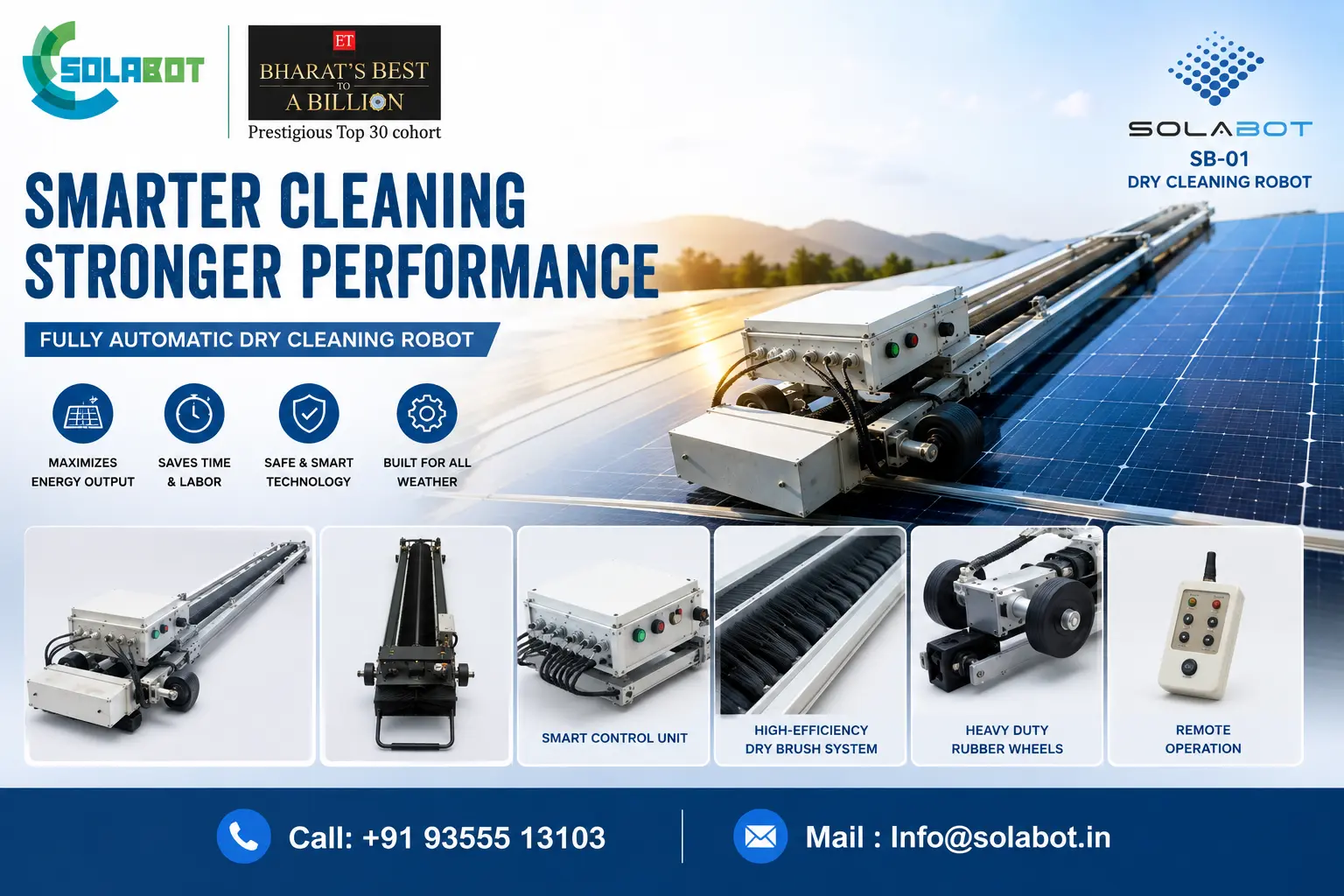
Introduction
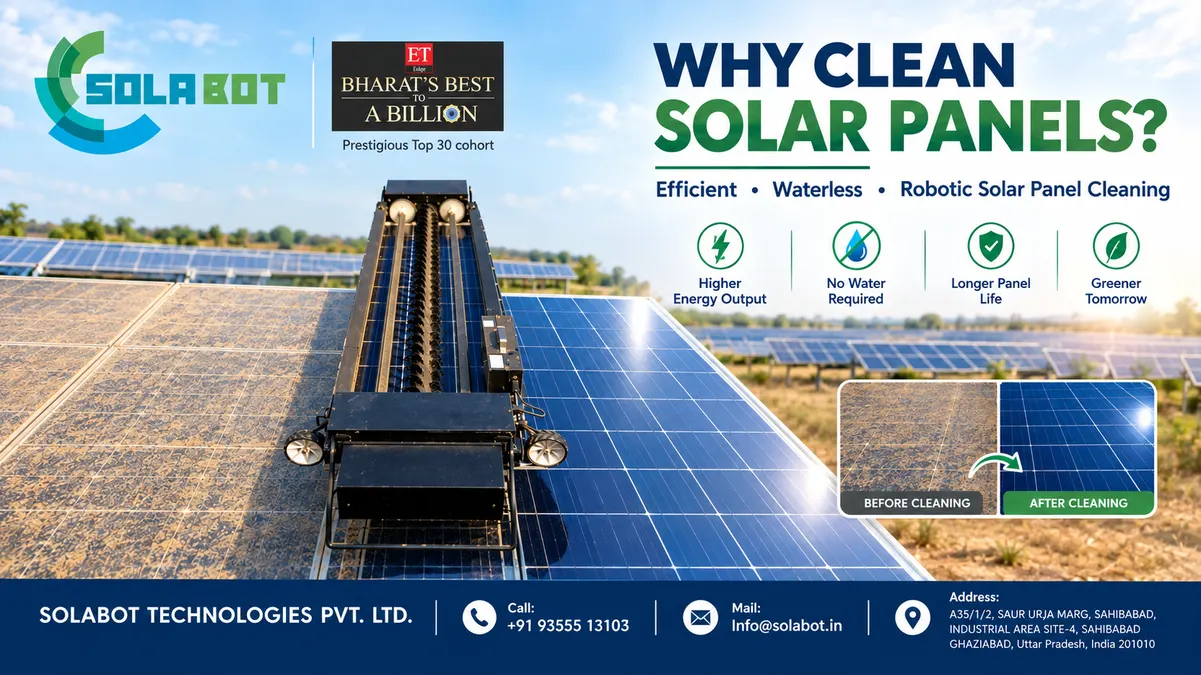
Solar energy has become a key player in the world’s transition to cleaner, more sustainable energy. With solar installations on rooftops, commercial buildings and large-scale solar farms continuing to grow, so too has the importance of keeping them operating at their best. One of the biggest challenges to that is keeping photovoltaic modules clean. Dust, dirt, sand and bird droppings can settle on the surface of solar panels and affect their ability to absorb sunlight efficiently. Traditional methods of cleaning can be labour-intensive, require significant amounts of water, take time and demand operational planning.
This is where robotic solar cleaning technology is creating a powerful change
Why Solar Panel Cleaning Matters
Solar panels are continuously exposed to the outdoor environment.
Depending on the location, they may collect:
- Dust
- Sand
- Pollution
- Pollen
- Bird droppings
- Leaves
- Industrial particles
- Other surface contaminants
When these materials accumulate, they can interfere with the amount of sunlight reaching the photovoltaic cells.
Regular solar panel cleaning therefore plays an important role in maintaining the operating condition of a solar installation.
For a small rooftop system, cleaning may be relatively straightforward. However, the challenge becomes much greater when dealing with hundreds or thousands of panels across a large solar plant.
The Rise of Robotic Solar Cleaning Technology
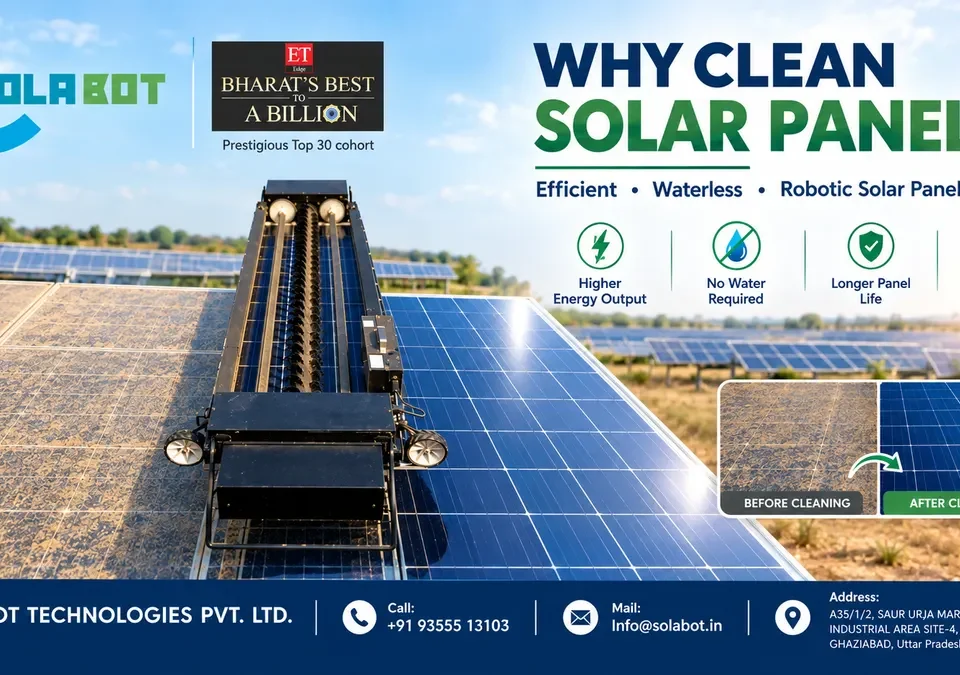
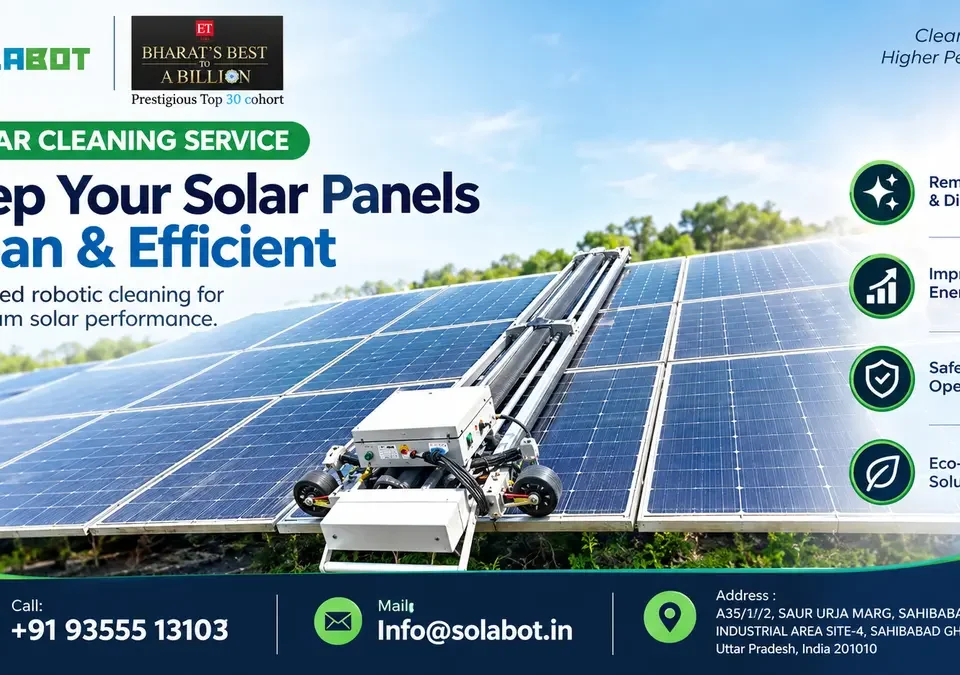
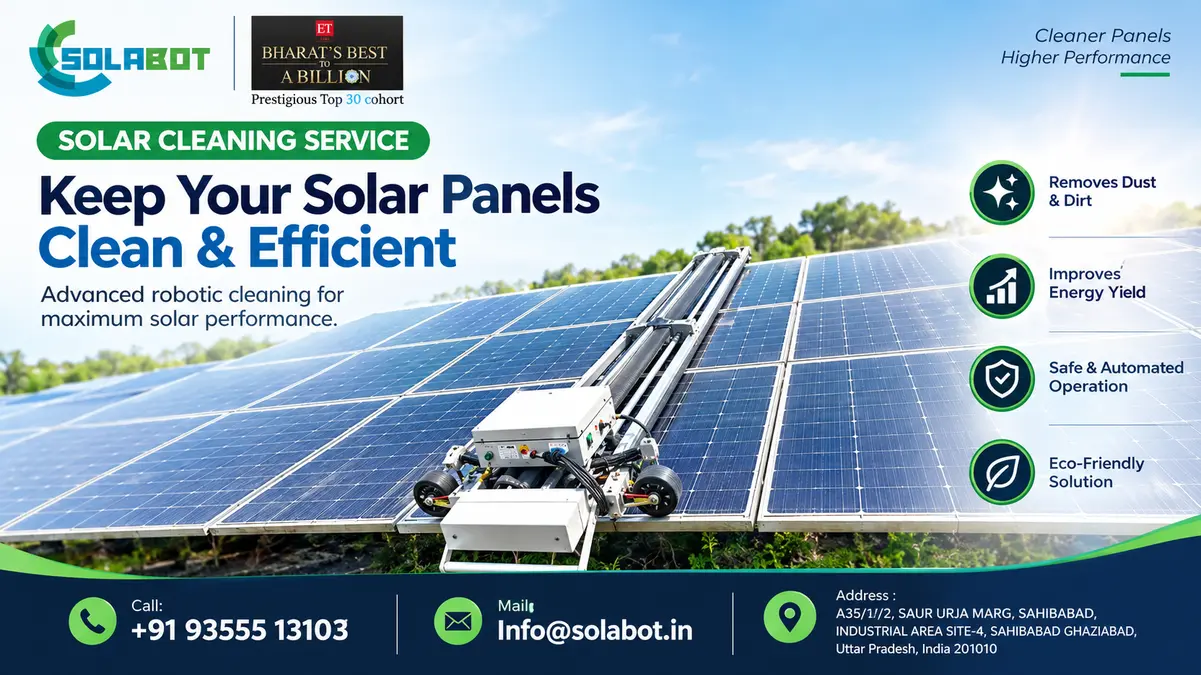
For many of these problems, automation can be a solution through robotic solar cleaning technology. Robotic systems can be deployed on specific surfaces of Solar panel cleaning and perform cleaning operations based on the system design instead of depending on workers to manually clean each and every module. Therefore, solar operators can benefit from better maintenance consistency and a less physically demanding experience for repetitive cleaning tasks..
The technology can be particularly useful for:
- Utility-scale solar plants
- Commercial solar installations
- Industrial rooftops
- Large solar farms
- Solar tracker systems
- Rooftop photovoltaic installations
The exact operating method depends on the robotic system, panel configuration, site conditions, and cleaning requirements.
What Is Robotic Solar Panel Cleaning?
solar modules and wash off the accumulated contaminants. Unlike traditional cleaning methods, robotic systems can be built around defined degrees of automation. Some systems may need operator involvement while advanced solutions can offer automated operation, self-charging, scheduled cleaning or central monitoring. The goal is simple: Clean solar panels efficiently while minimizing unnecessary manual work.
This makes robotic technology particularly attractive for large installations where cleaning thousands of modules manually can be challenging.
How Robotic Solar Cleaning Technology Works
The operating process varies between different robotic systems, but the general concept involves several important stages.
- Robot Deployment
The cleaning robot is positioned on the solar installation according to the site’s layout.
The robot must be compatible with the panel configuration and operating environment.
- Movement Across the Modules
The robotic system travels along the designated cleaning path.
Its movement is designed to maintain appropriate contact with the surface while avoiding unnecessary stress on the photovoltaic modules.
- Cleaning Action
Depending on the technology, the robot uses an appropriate cleaning mechanism to remove dust and other particles.
Dry or waterless cleaning can be particularly useful in regions where water availability is limited.
- Automated Operation
Advanced systems can reduce the need for continuous human involvement.
Automation can help operators organize cleaning schedules and improve maintenance consistency.
- Monitoring
Some robotic solutions can be integrated with monitoring and control systems, allowing operators to track operation and maintenance activities more effectively.
Waterless Cleaning and Solar Maintenance
Water availability is an important consideration for many solar installations.
Traditional solar panel cleaning methods may involve water, which can increase consumption and create additional logistical requirements.
Waterless or dry cleaning technology provides an alternative approach.
This can be particularly valuable for:
- Desert solar farms
- Water-scarce regions
- Large utility-scale plants
- Remote solar installations
- Industrial solar facilities
By reducing dependence on water, dry robotic cleaning systems can support a more resource-efficient maintenance strategy.
Key Benefits of Robotic Solar Cleaning Technology
The growing interest in robotic solar cleaning technology is driven by several practical benefits.
Reduced Manual Effort
Large solar plants may contain thousands of modules.
Cleaning these panels manually requires considerable workforce coordination. Robotic systems can automate repetitive cleaning activities and reduce the amount of physical work required.
Improved Cleaning Consistency
Manual cleaning can vary depending on the worker, equipment, weather, and operating conditions.
Automation can provide a more consistent cleaning process when the robotic system is correctly configured and maintained.
Water Reduction
Waterless robotic cleaning can reduce the need for water-based maintenance.
This can be an important advantage for solar installations operating in dry climates.
Better Operational Efficiency
Automating repetitive maintenance activities can help solar operators organize their cleaning processes more efficiently.
Instead of relying entirely on manual schedules, operators can incorporate robotic cleaning into a structured maintenance plan.
Support for Large Solar Plants
The larger the solar installation, the more challenging manual cleaning can become.
Robotic systems can be especially valuable where cleaning requirements involve extensive module areas.
Robotic Solar Panel Cleaning for Solar Farms
Large solar farms represent one of the strongest applications for robotic solar panel cleaning.
Utility-scale projects can contain enormous numbers of photovoltaic modules spread across large areas.
Cleaning such installations manually may involve:
- Large cleaning teams
- Transportation
- Water supply
- Equipment movement
- Scheduling
- Safety procedures
- Repeated maintenance cycles
Robotic systems can help reduce some of these operational complexities.
For solar farm operators, the goal is not simply to clean panels. It is to establish a reliable and repeatable maintenance process that supports long-term plant performance.
Rooftop Solar Cleaning
Rooftop installations create a different set of challenges.
Workers may need to operate at height, which introduces additional planning and safety considerations.
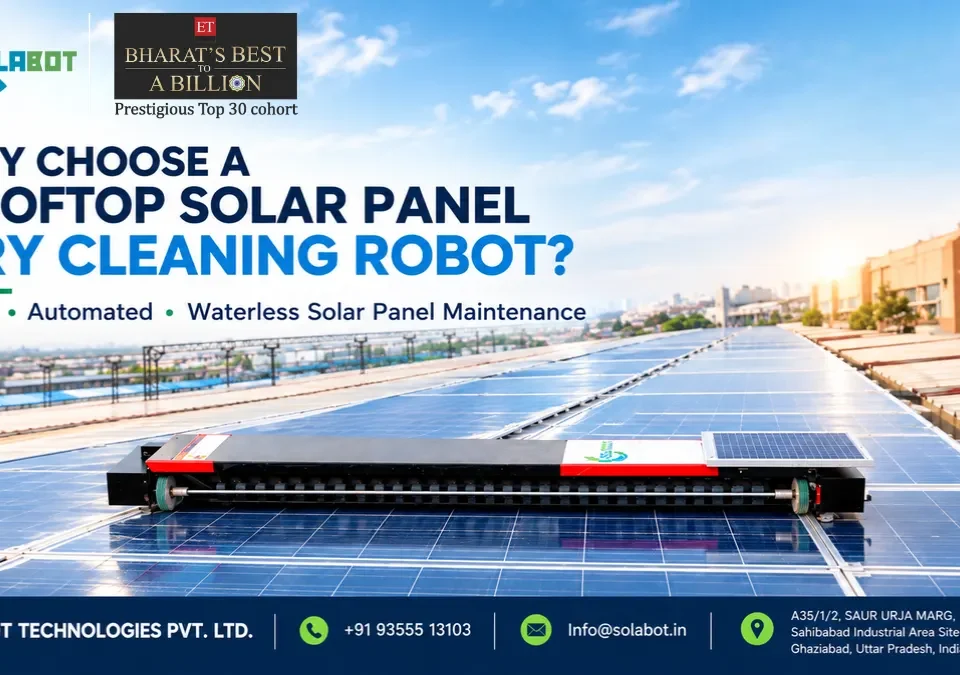
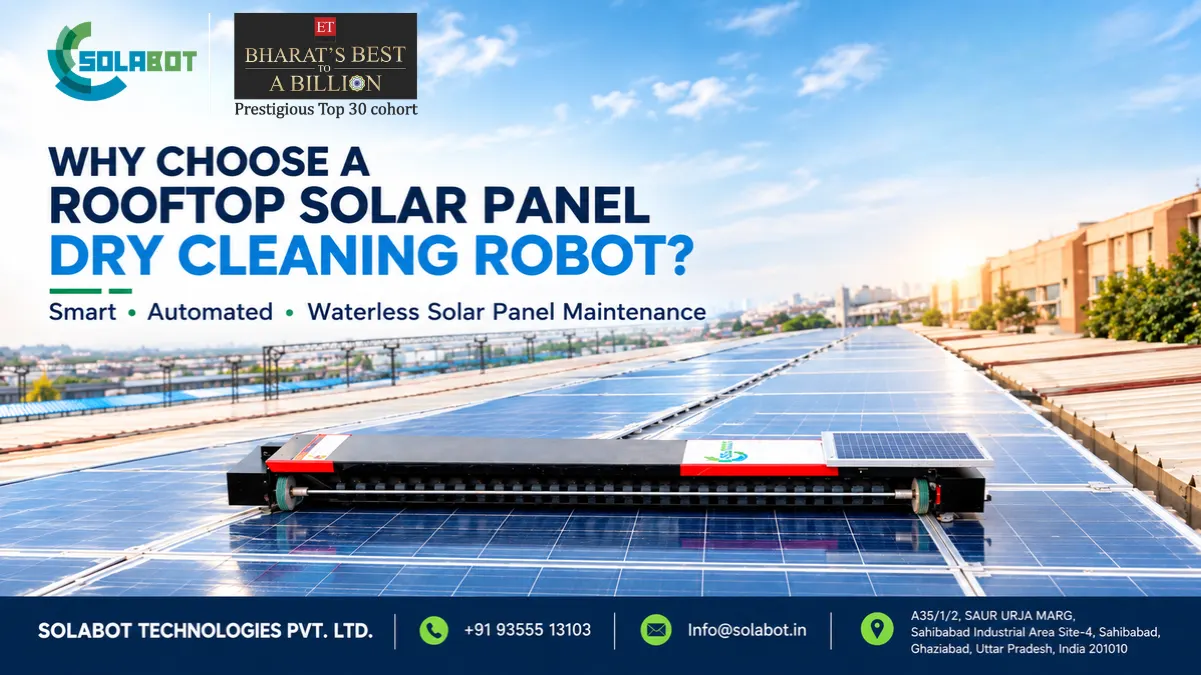
A robotic cleaning system designed for rooftop applications can provide an alternative approach to repetitive manual cleaning.
Robotic solar cleaning technology can therefore become increasingly relevant as commercial and industrial rooftop solar installations expand.
For businesses with extensive rooftop solar systems, automated maintenance can potentially simplify recurring cleaning operations.
Solar Tracker Cleaning
Solar trackers allow photovoltaic modules to move according to the position of the sun.
However, their moving structures can create specific maintenance requirements.
Robotic systems designed for tracker-compatible cleaning can help address these requirements.
This is an area where specialized robotic solar panel cleaning solutions can provide value because the cleaning equipment needs to work with the physical configuration and movement characteristics of the tracker system.
Why Automation Is Becoming More Important
Solar power plants are becoming larger, more sophisticated, and increasingly data-driven.
At the same time, operators are looking for ways to control operating costs and improve maintenance efficiency.
Automation provides an opportunity to address repetitive activities through technology.
Cleaning is one such activity.
Instead of treating panel cleaning as an occasional manual task, solar operators can incorporate automated cleaning into a broader operations and maintenance strategy.
This shift is one reason robotic solar cleaning technology is attracting growing attention from solar developers, plant operators, EPC companies, and maintenance teams.
Choosing the Right Robotic Cleaning Solution
Not every solar installation has the same requirements.
Before selecting a robotic cleaning system, operators should evaluate several factors.
Panel Configuration
The robot should be compatible with the physical design and arrangement of the modules.
Site Size
Large solar farms may have different requirements from commercial rooftops.
Cleaning Frequency
The required cleaning schedule depends on local environmental conditions and the level of soiling.
Water Availability
Sites with limited water resources may benefit significantly from dry or waterless cleaning solutions.
Automation Level
Operators should determine whether they need a manually assisted, semi-automatic, or highly automated system.
Monitoring Requirements
For larger installations, centralized monitoring and operational visibility can become important.
A proper assessment helps ensure that the chosen solution fits the site’s technical and operational requirements.
Solabot and Robotic Solar Cleaning Solutions
Solabot focuses on robotic solutions designed for solar panel maintenance and cleaning applications.
Its product range includes solutions such as the SB-01 Fully Automatic Dry Cleaning Robot, SB-03 Semi-Automatic Dry Cleaning Robot, SB-04T Portable Tracker Dry Cleaning solution, MDS Mobile Docking Station, and SB-RT Rooftop Cleaning Robot.
These solutions address different requirements across solar installations.
The availability of different robotic configurations demonstrates an important point: solar cleaning automation is not a one-size-fits-all technology.
Different plants require different approaches based on their panel arrangement, location, scale, and operational requirements.
The Future of Solar Panel Cleaning
The future of solar panel cleaning is likely to become increasingly automated.
As solar capacity expands, operators will need maintenance solutions capable of working efficiently across larger installations.
Future developments may focus on:
- Greater autonomy
- Improved navigation
- Better cleaning efficiency
- Reduced water consumption
- Remote monitoring
- Automated scheduling
- Improved compatibility with solar trackers
- Integration with plant monitoring systems
- Smarter maintenance planning
The combination of robotics, automation, monitoring, and data-driven maintenance could significantly change how solar plants approach routine cleaning.
Final Thoughts
Robotic solar cleaning technology is propelling modern solar O&M forward. As solar installations grow larger and more common, traditional manual cleaning methods can become increasingly difficult to manage efficiently. Robotic solutions offer a way to automate repetitive cleaning tasks, decrease manual labor, allow for water-efficient maintenance and enhance operational consistency. Robotic solar panel cleaning provides a practical solution to the growing challenges of photovoltaic maintenance, whether for large solar farms, commercial rooftops or tracker-based installations. For solar operators looking into automation, the key is choosing technology that fits the site’s panel configuration, size, cleaning needs and operational objectives. As companies like Solabot keep innovating, robotic cleaning is becoming a more and more vital part of how the modern solar industry tacklesAbout Solabot
Solabot is developing robotic solutions for solar panel cleaning and maintenance and marketing products for various solar applications such as automatic dry cleaning, semi-automatic cleaning, tracker cleaning, rooftop cleaning and robotic infrastructure support. As the solar industry expands, robotic solar cleaning technology can be more beneficial by enabling operators to maintain panels cleaner and improving maintenance efficiency.
Related posts