Solar Panel Cleaning Services for Solar Plants: Methods, Benefits & Robotic Solutions
November 13, 2026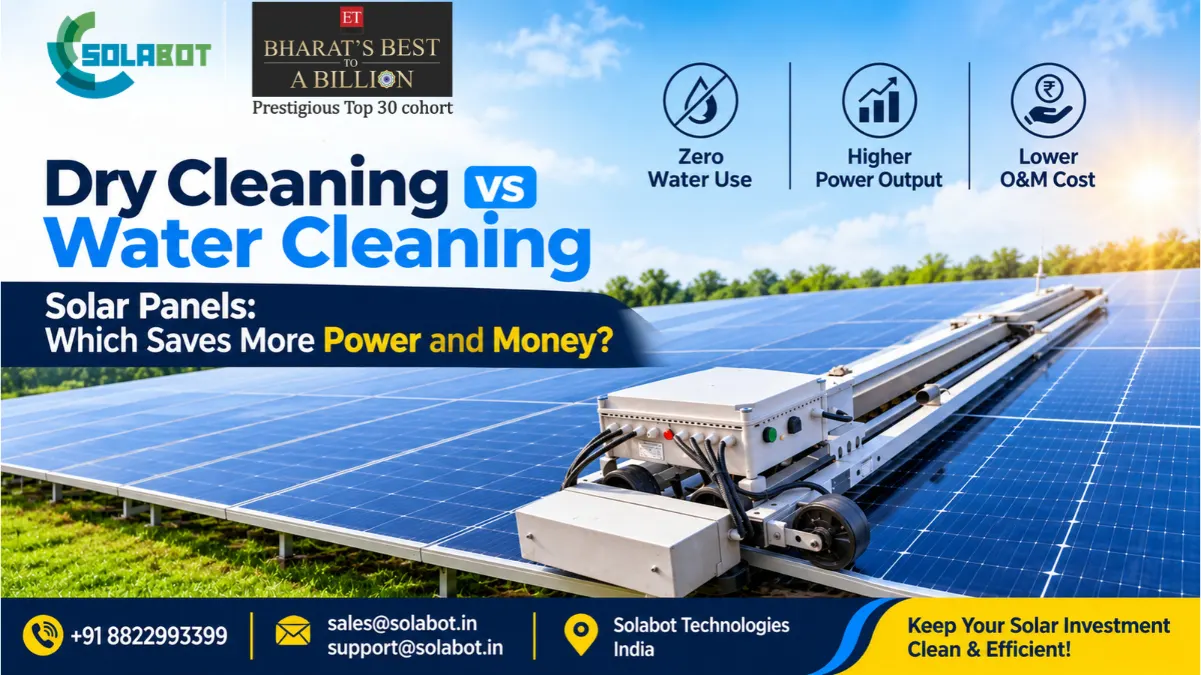
Dry Cleaning vs Water Cleaning Solar Panels: Which Saves More Power and Money?
Dust is a quiet thief at any solar plant. It settles on modules every day, blocks sunlight and lowers generation. Cleaning solves the problem, but the method you choose matters. For plant owners in India, the real question is Dry Cleaning vs Water Cleaning Solar Panels: which one protects your modules, your budget and your water supply better? This guide explains both methods in plain language so you can decide with confidence.
Why Solar Panels Need Regular Cleaning
Solar panels only produce power when light reaches the cells. Dust, sand, bird droppings and pollution form a thin layer on the glass and cut the light that gets through. In dry, dusty regions like Rajasthan and Gujarat, this layer builds up fast. Over weeks, the loss in output becomes noticeable, and over a year it adds up to real money.
Regular cleaning keeps output steady. The method decides how much you spend, how much water you use and whether the panels stay in good condition for 25 to 30 years.
How Water Cleaning Works
Water cleaning is the traditional method. Workers or tanker-mounted systems spray water on the panels and wipe them with brushes or wipers. It removes loose dust and sticky dirt like bird droppings quite well.
It also has clear drawbacks:
- Heavy water use. Large plants need a steady supply of water, which is hard in desert and drought-prone areas.
- Mineral deposits. Hard water leaves white spots and film on the glass. Over time, these can block light as much as dust does.
- Labour and logistics. Tankers, pumps and cleaning crews raise operating costs.
- Safety risks. Workers walk on or near panels, which risks microcracks in cells and injuries to people.
- Thermal stress. Spraying cold water on very hot panels in the afternoon is not recommended, so cleaning has to be timed carefully.
How Dry Cleaning Works
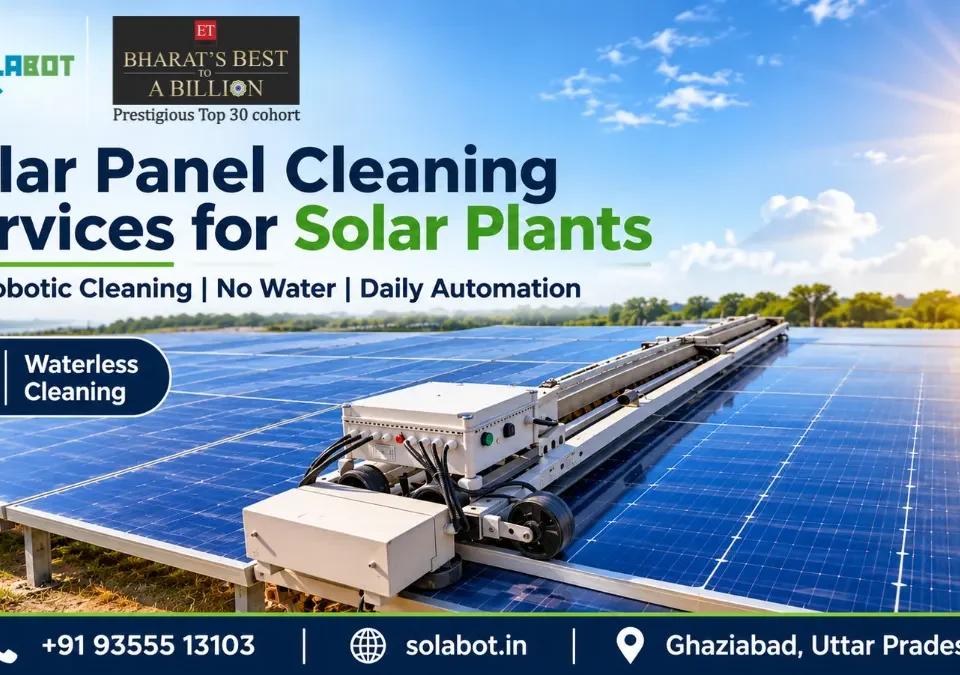
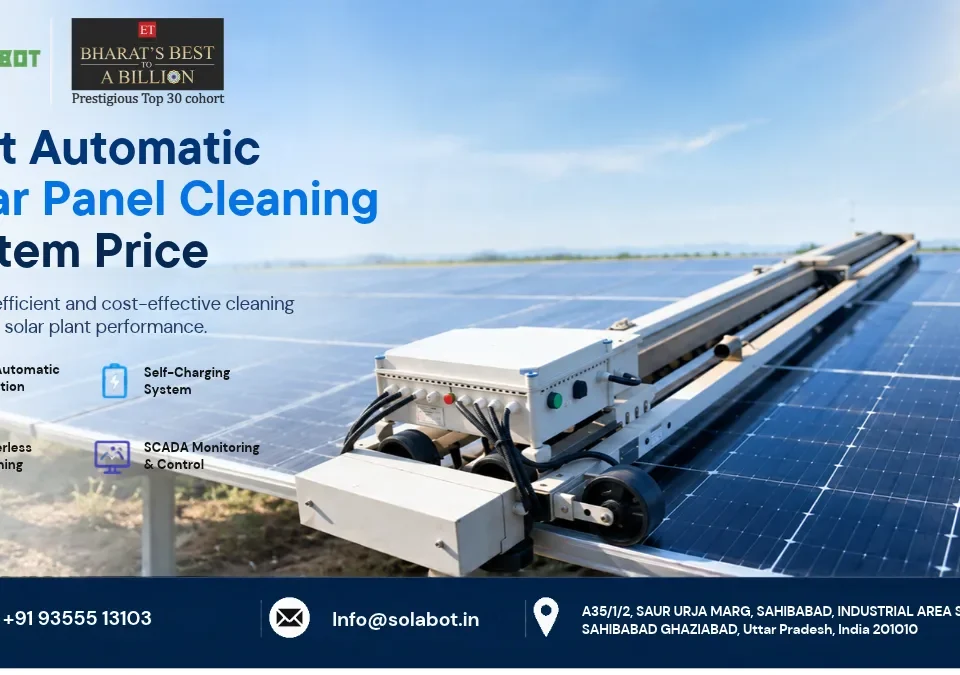
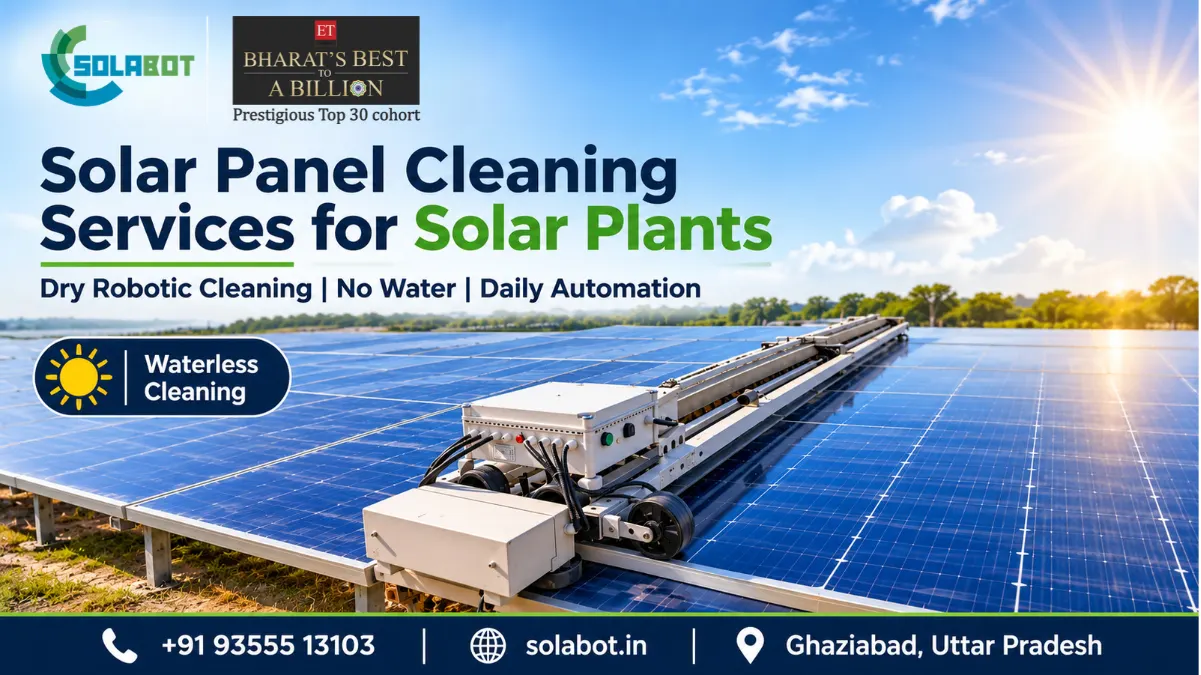
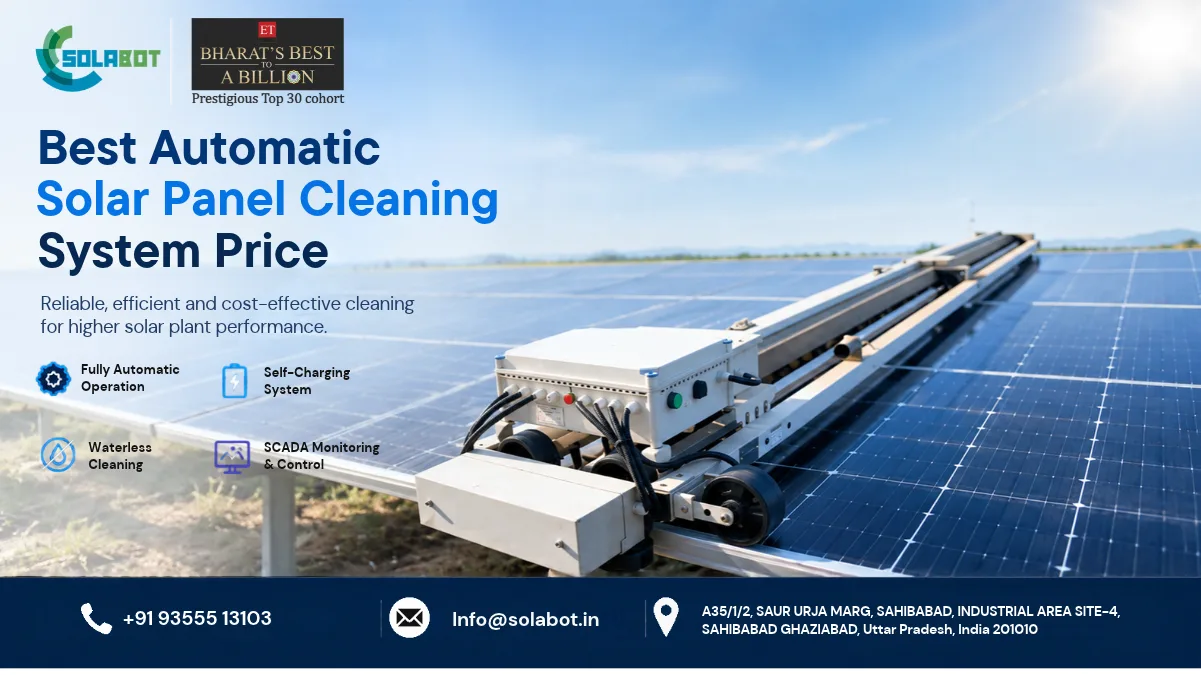
Dry cleaning uses soft brushes and airflow to sweep dust off the panel surface without any water. Robotic systems do this automatically along each row of panels, usually early in the morning or at night when the panels are not producing power.
Solabot, for example, builds Waterless solar panel cleaning robots that use ultra-soft PBT brushes. The SB-01 fully automatic dry cleaning robot runs on a schedule, charges itself and can be monitored through a Centralized RCMS system. Because the robots clean every day, dust never builds up into a thick layer, so a light brushing is enough.
Dry cleaning has its own limits:
- It works best on loose dust, which is the main problem at most Indian solar sites.
- Heavy, sticky dirt, such as bird droppings or oily residue, may need occasional spot cleaning.
- It needs an upfront investment in equipment.
Dry Cleaning vs Water Cleaning Solar Panels: Side-by-Side Comparison
| Factor | Dry Cleaning (Robotic) | Water Cleaning |
|---|---|---|
| Water use | None | High |
| Best for | Dusty, arid, water-scarce sites | Sites with plentiful clean water |
| Labour need | Very low, mostly monitoring | High |
| Cleaning frequency | Daily, automated | Weekly or monthly, manual |
| Risk to panels | Low with soft brushes | Higher from walking, hard water and thermal shock |
| Sticky dirt removal | Limited, may need spot cleaning | Good |
| Upfront cost | Higher | Lower |
| Running cost over time | Lower | Higher (water, labour, transport) |
The table shows that water cleaning is cheaper to start but more expensive to keep up. Dry cleaning costs more at the beginning but usually saves money over the long run, especially at large plants.
When Water Cleaning Still Makes Sense
Water cleaning is not always the wrong choice. It can work well when:
- Your plant is small and labour is cheap and easy to find.
- Clean, soft water is easy to access at low cost.
- Panels are often covered with sticky dirt or bird droppings.
- You need a one-time deep clean after construction or a long monsoon.
Some plants also combine both methods: daily dry robotic cleaning, plus an occasional water wash for stubborn spots.
When Dry Cleaning Is the Better Choice
Dry cleaning is usually the stronger option when:
- Your plant is utility-scale, so water, labour and transport costs grow quickly.
- The site is in a desert or water-stressed region.
- You want steady, predictable cleaning without depending on workers.
- You care about reducing operations and maintenance (O&M) costs.
- You want to avoid hard-water stains on the glass.
Solabot reports that its dry robotic systems can raise power production by up to 5%. It also reports more than 150 Completed Solar Projects across 14+ states in India. Results vary by site, dust type and panel layout, so ask any supplier for data from projects similar to yours.
How to Choose the Right Method
Before you decide, work through these questions:
- Check your water supply. If water is costly or scarce, dry cleaning is the safer long-term bet.
- Look at your dust type. Loose, fine dust suits dry cleaning. Sticky or oily dirt may need water support.
- Calculate cost over 5 to 10 years, not just the first year. Include water, labour, transport and losses from dirty panels.
- Check module compatibility. Make sure the cleaning system is approved or tested with your module brands, and that the brush material will not damage the glass or anti-reflective coating.
- Match the robot to your layout. Fixed-tilt, tracker and rooftop plants need different designs, such as the SB-04T tracker cleaning robot or the SB-RT rooftop cleaning robot. Smaller sites may suit a Semi-automatic dry cleaning robot.
- Ask about service support. Training, spare parts and on-site engineers matter as much as the machine.
- Request a site assessment. A good supplier will study your plant before giving a quote.
Final Thoughts
There is no single answer for every plant, but the trend is clear. As solar farms grow larger and water gets scarcer, more owners are moving toward waterless, automated cleaning. Understanding dry cleaning vs water cleaning solar panels helps you protect your investment and avoid hidden costs. If you run a utility-scale or commercial plant, compare the total cost over several years before choosing, and talk to a supplier who can show real project results.
Looking for a waterless cleaning solution for your solar plant? Contact Solabot Technologies for a site assessment and quote.