
Robots for Solar Plant Maintenance: A Smarter Way to Service Solar Panels
September 17, 2026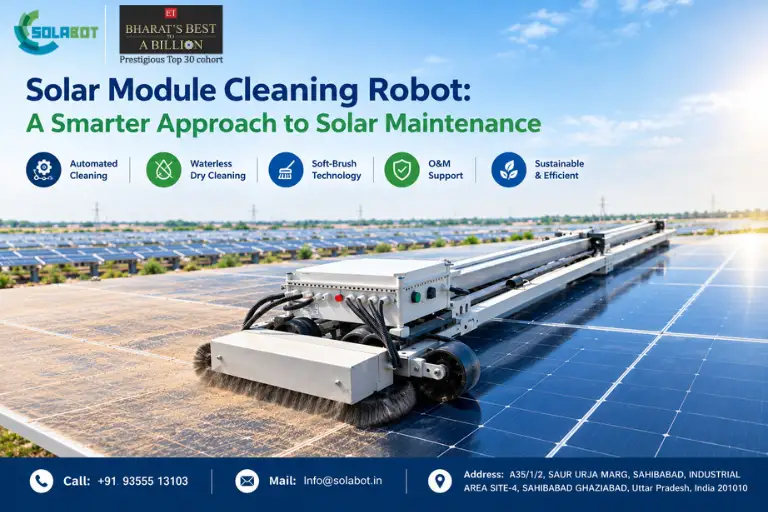
Solar Module Cleaning Robot: A Smarter Approach to Solar Maintenance
With the increase of solar farms, the efficient maintenance of photovoltaic modules becomes more and more important. Panel surfaces can collect dust, sand, pollen, bird droppings and other particles, which reduces the amount of sunlight reaching the cells. Routine cleaning is therefore an important part of the operations and maintenance of solar systems.
A Solar Module Cleaning Robot provides an automated way to deal with this repetitive task. Instead of being dependent on manual labourers and water-based washing, robotic cleaning technology can traverse photovoltaic modules and wipe away accumulated dust with specialised brushes. This can help solar plant operators establish a more consistent and resource-conscious cleaning routine.
Why You Should Clean Solar Panels Regularly
Solar panels are subject to outdoor conditions throughout their entire operating life. Surface soiling can happen often in dry and dusty locations. If dust is not cleaned, then it can block sunlight from reaching the photovoltaic surface.
Traditional cleaning methods often require teams of workers, water, vehicles and cleaning gear. Utility-scale solar farms, however, can have thousands of modules covering a large area. Manual cleaning can be time-consuming and operationally demanding if done frequently.
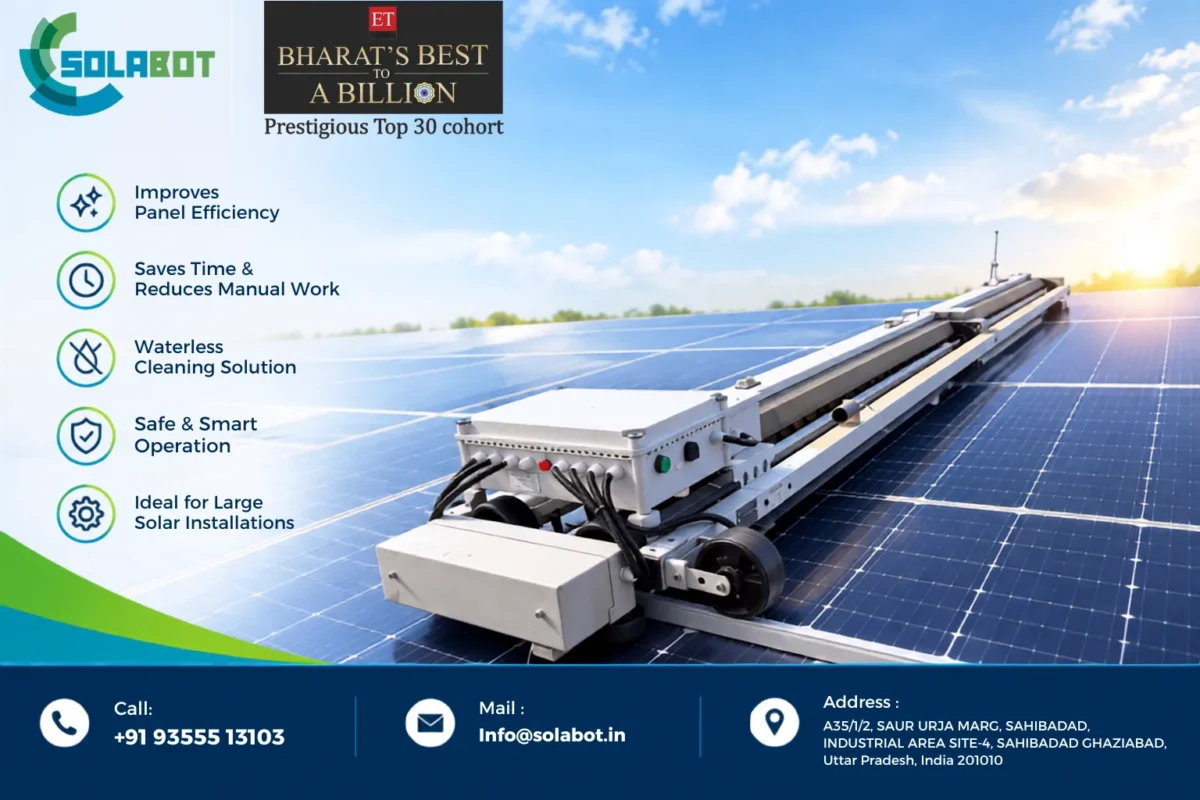
A Solar Module Cleaning Robot is designed to automate repetitive cleaning work. It can be especially useful for large installations where regular maintenance is required.
How Robotic Solar Panel Cleaning Works
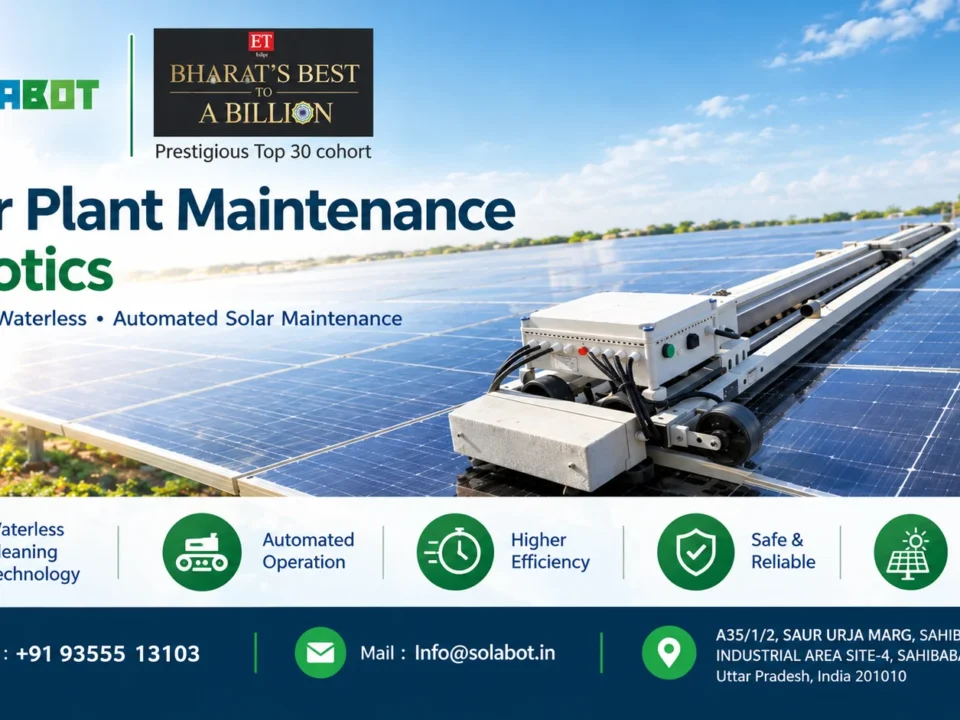
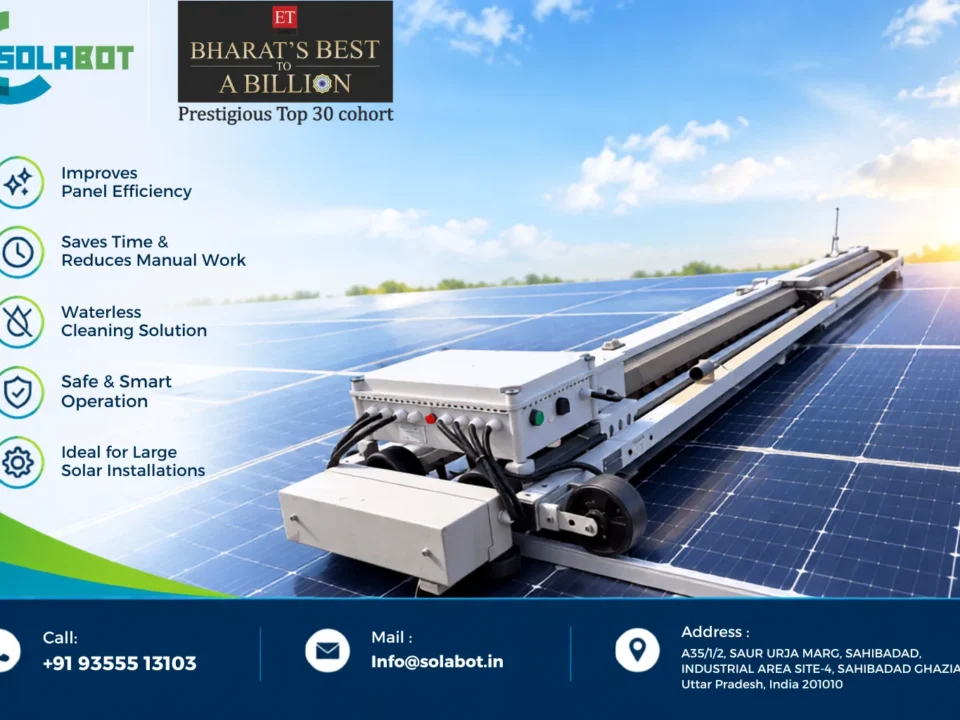
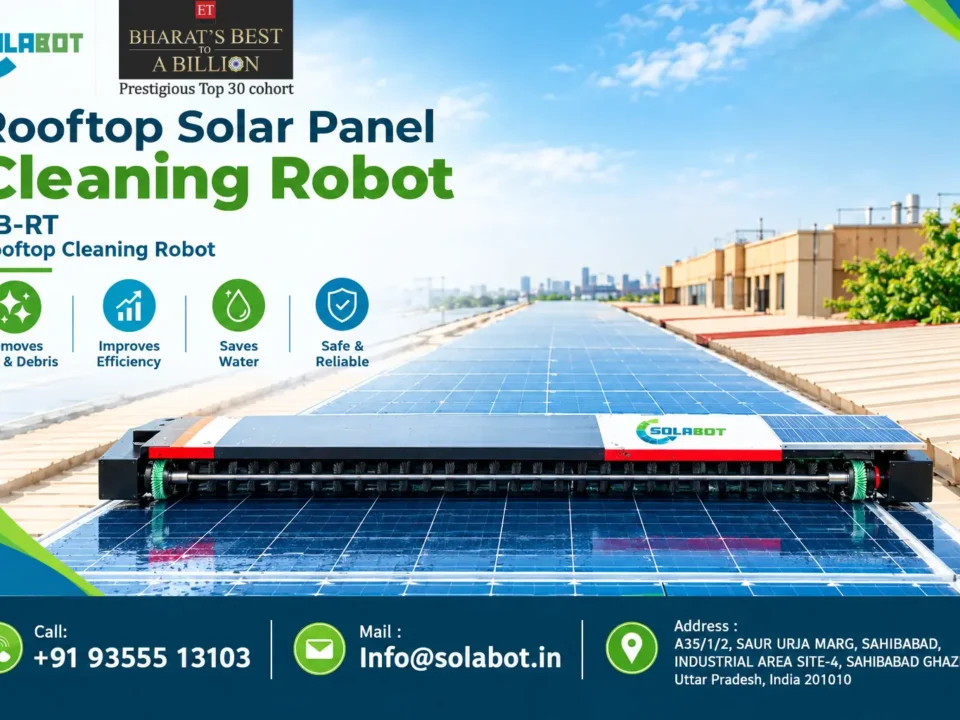
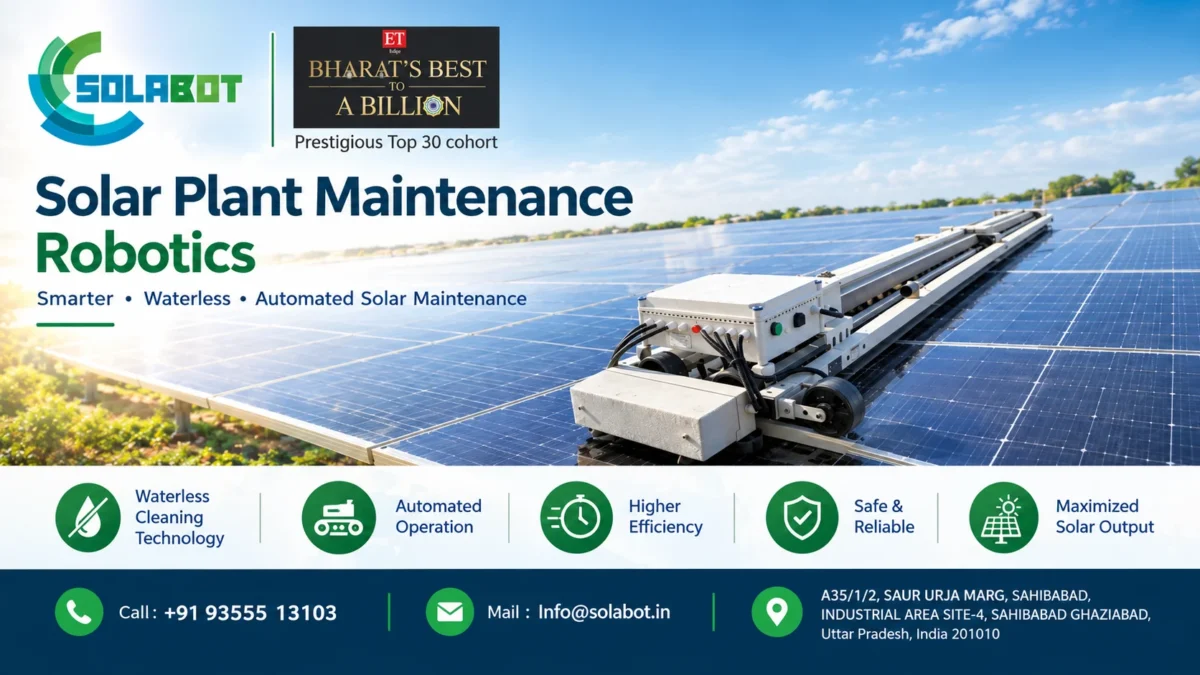
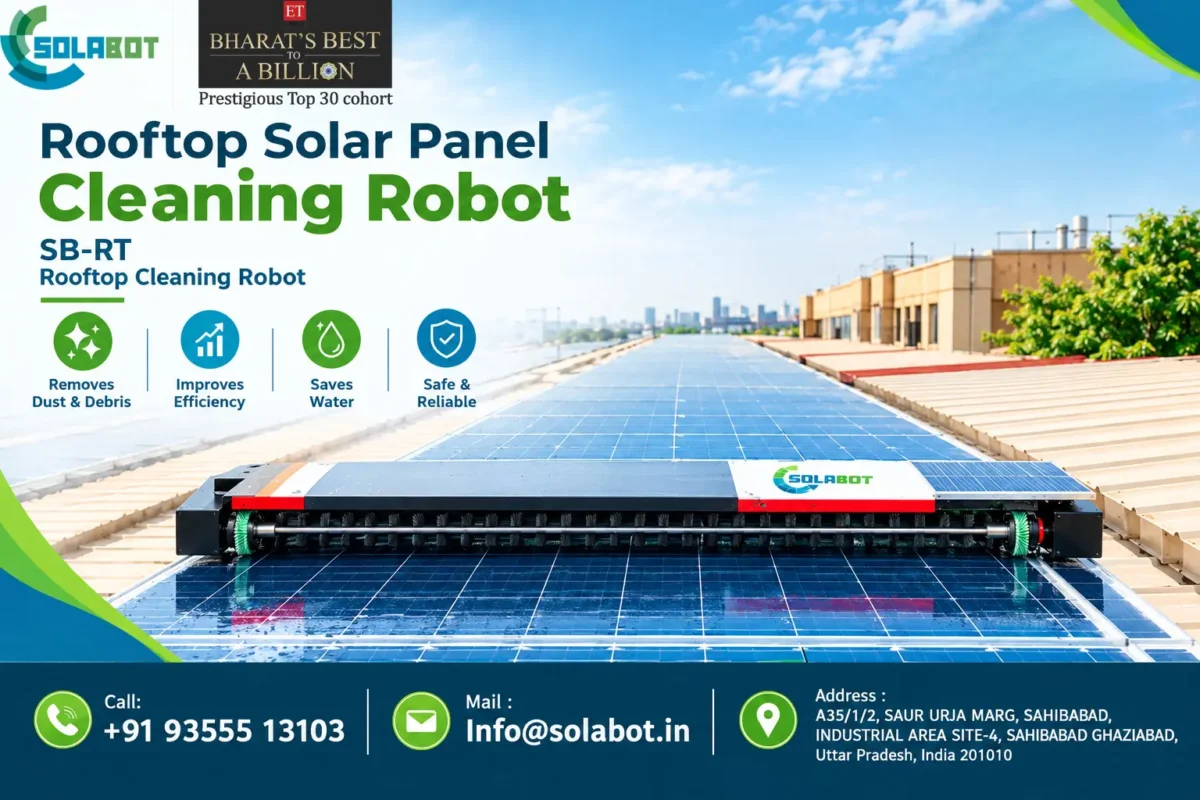
It’s a simple process. The robot runs over the photovoltaic modules, rotating or moving soft brushes across their surface. The brushes loosen and remove dust without the need for traditional water washing.
The cleaning process can be scheduled and monitored automatically in some systems. Some robotic solutions can return to a docking station after completing a cleaning route and recharge themselves for another cycle.
Solabot Technologies Pvt. Ltd. develops robotic solutions for dry-cleaning solar panels and solar power plants. The company supports waterless cleaning, automated operation and soft-brush technology for solar maintenance.
Advantages of a Solar Module Cleaning Robot
1. Waterless Cleaning
- Reduces dependence on water-based panel washing.
- Suitable for dry and water-scarce solar plant locations.
- Supports more resource-conscious solar maintenance.
2. Reduced Manual Labour
- Automates repetitive panel-cleaning activities.
- Reduces the need for extensive manual cleaning teams.
- Particularly useful for large-scale solar farms.
3. Consistent Cleaning
- Supports scheduled cleaning cycles.
- Helps maintain a more regular cleaning routine.
- Useful for solar plants exposed to frequent dust and soiling.
4. Soft-Bristle Cleaning
- Uses specialised soft brushes for removing accumulated dust.
- Designed to provide gentle contact with photovoltaic module surfaces.
- Helps support routine robotic panel maintenance.
5. Automated Operation
- Reduces dependence on continuous manual operation.
- Certain robotic systems can follow predefined cleaning routes.
- Some systems can return to a docking station for recharging.
6. Supports Solar O&M
- Can become part of a broader solar operations and maintenance strategy.
- Helps maintenance teams manage repetitive cleaning requirements.
- Suitable for applications where systematic and scalable cleaning is required.
7. Suitable for Large Solar Installations
- Can be used for large photovoltaic installations.
- Helps address the challenge of cleaning extensive module areas.
- Provides an automated alternative to conventional cleaning methods.
Solabot Technologies Pvt Ltd.
Solabot Technologies Pvt. Ltd deals in robotic solutions for cleaning of solar panels. It has a published product range, with different configurations for different cleaning needs. The company lists the SB-01 fully automatic dry-cleaning robot, the SB-03 semi-automatic dry-cleaning robot and the SB-04T tracker-oriented cleaning solution.
Solabot says the SB-01 is fully automatic and can be programd to clean and recharge itself. The company also details SCADA-based monitoring and a solar-assisted charging arrangement for the system.
Operators should evaluate any robotic cleaning solution by conducting their own evaluation of compatibility with their module dimensions, row configuration, trackers and site conditions
How to Select the Right Robotic Cleaning Solution
Each solar installation has different requirements. Before selecting a Solar Module Cleaning Robot, plant operators must consider:
- Module layout
- Panel size
- Row length
- Panel tilt
- Tracker configuration
- Environmental conditions
- Cleaning frequency
- Battery capacity
- Charging arrangements
- Brush design
- Protection ratings
- Remote monitoring
- Maintenance requirements
A good system will fit in naturally with the plant’s operation and maintenance programme, rather than creating extra complexity.
Why Wash Without Water?
The Solar Module Cleaning Robot is especially valuable for solar plants operating in areas where water is scarce or expensive to ship. Less water requirements can ease logistics and allow more resource-efficient maintenance.
This consideration can be significant for Indian solar projects, as large installations are located in regions with diverse climates, including places that experience dry and dusty conditions. An alternative to frequent water-based washing could be an Solar Module Cleaning Robot
Long-Term Maintenance and Reliability
Automation doesn’t mean that the cleaning equipment itself doesn’t need any maintenance. Periodic inspection of robotic systems should be performed with special attention to:
- Brushes
- Wheels
- Batteries
- Motors
- Sensors
- Charging equipment
- Communication systems
Following the manufacturer’s maintenance schedule can help operators to keep the equipment available for scheduled cleaning.
Final Thoughts
A Solar Module Cleaning Robot can help modern solar plants with a more automated approach to panel maintenance and less dependency on manual cleaning on a regular basis. Waterless operation, soft-brush cleaning, scheduled cycles and monitoring capabilities make robotic technology relevant to solar operations and maintenance.
Solabot Technologies Pvt Ltd. provides robotic dry-cleaning solutions for various solar applications, such as fully automatic, semi-automatic and tracker-oriented systems. These solutions can be assessed by solar developers, EPCs and plant operators on the basis of module configuration, environment and maintenance goals.
As solar capacity continues to expand, efficient cleaning will remain a key component in the maintenance of photovoltaic assets. Robotic dry-cleaning technology is one practical way of making solar maintenance more systematic, scalable and water-conscious.