Solar Module Cleaning Robot by Solabot Technologies Pvt Ltd
September 19, 2026
Robotic Solar Panel Cleaning System for Efficient Solar Maintenance
September 26, 2026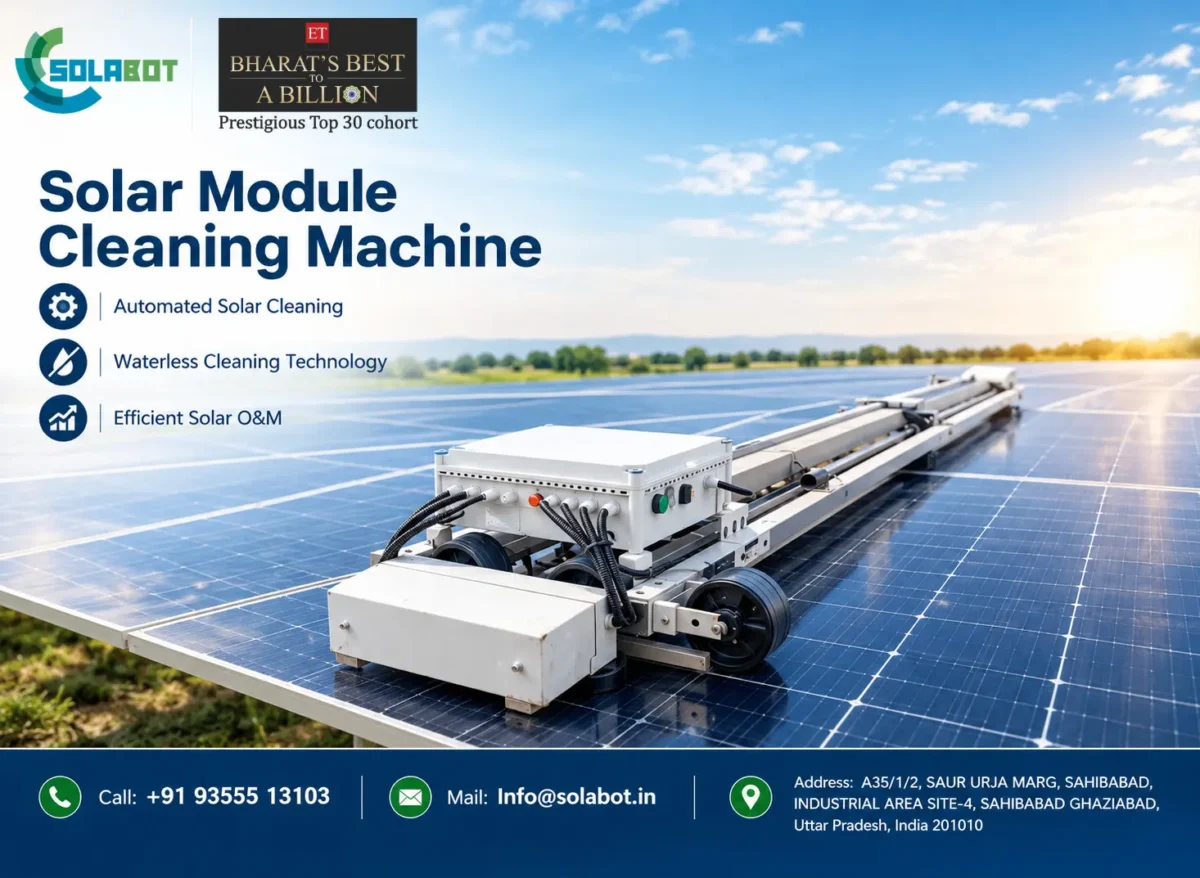
Solar Module Cleaning Machine: Benefits, Types And Working
Solar energy is an important source of clean electricity for homes, commercial buildings, factories, and utility-scale solar plants. However, installing photovoltaic modules is one part of maintaining a productive solar system.
Regular cleaning is also essential because dust, sand, pollen, bird droppings, pollution, and other deposits can collect on the glass surface. A Solar Module Cleaning Machine helps make this maintenance process more systematic and practical.
What Is a Solar Module Cleaning Machine?
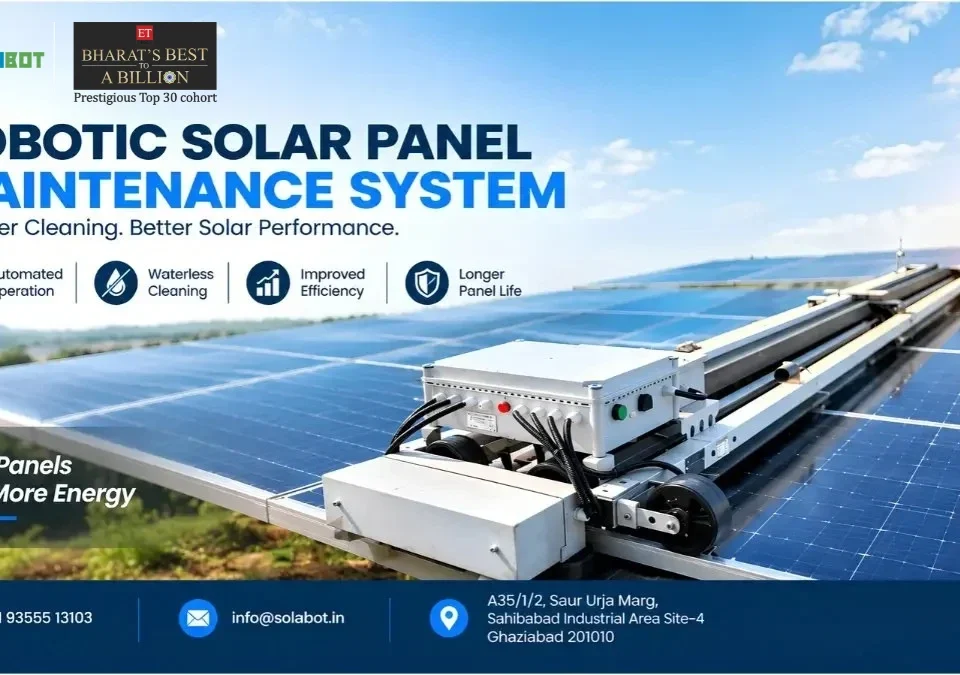
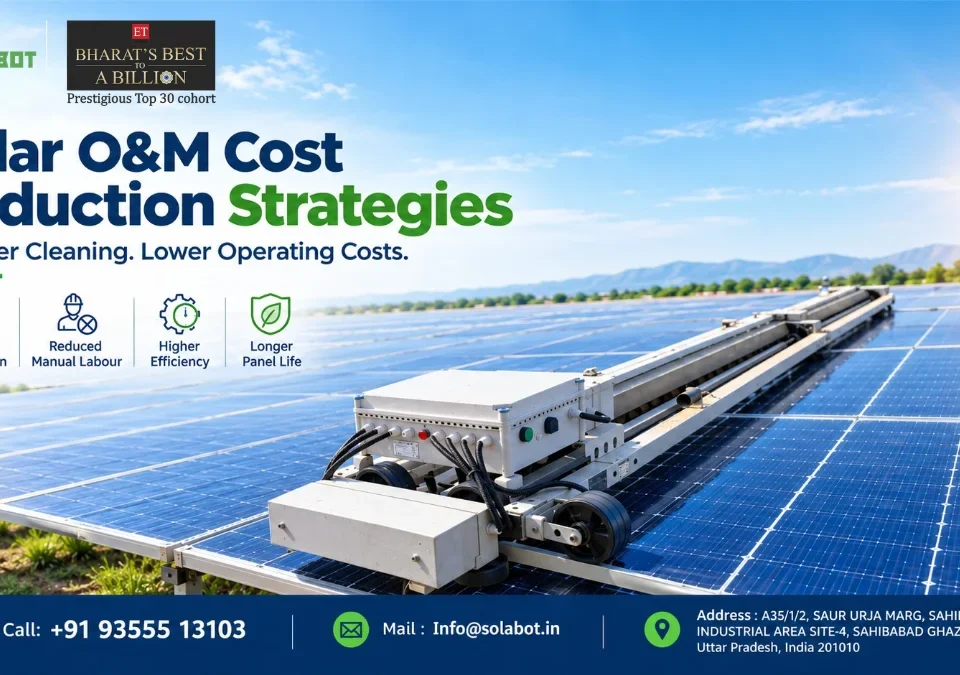
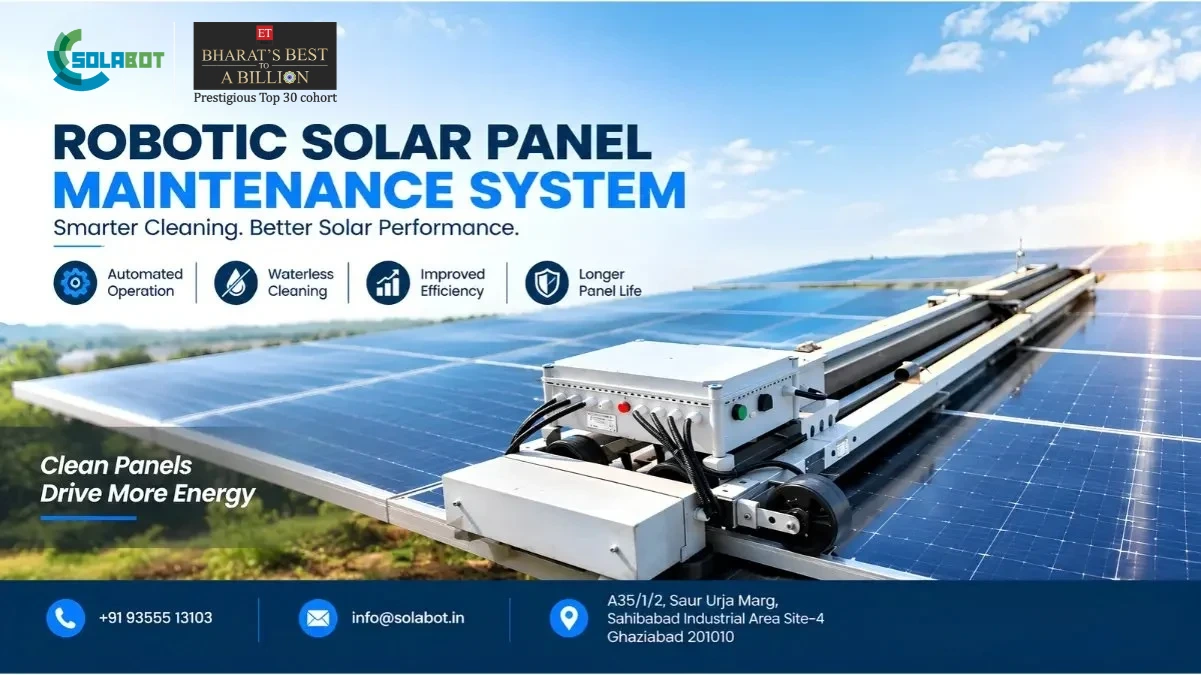
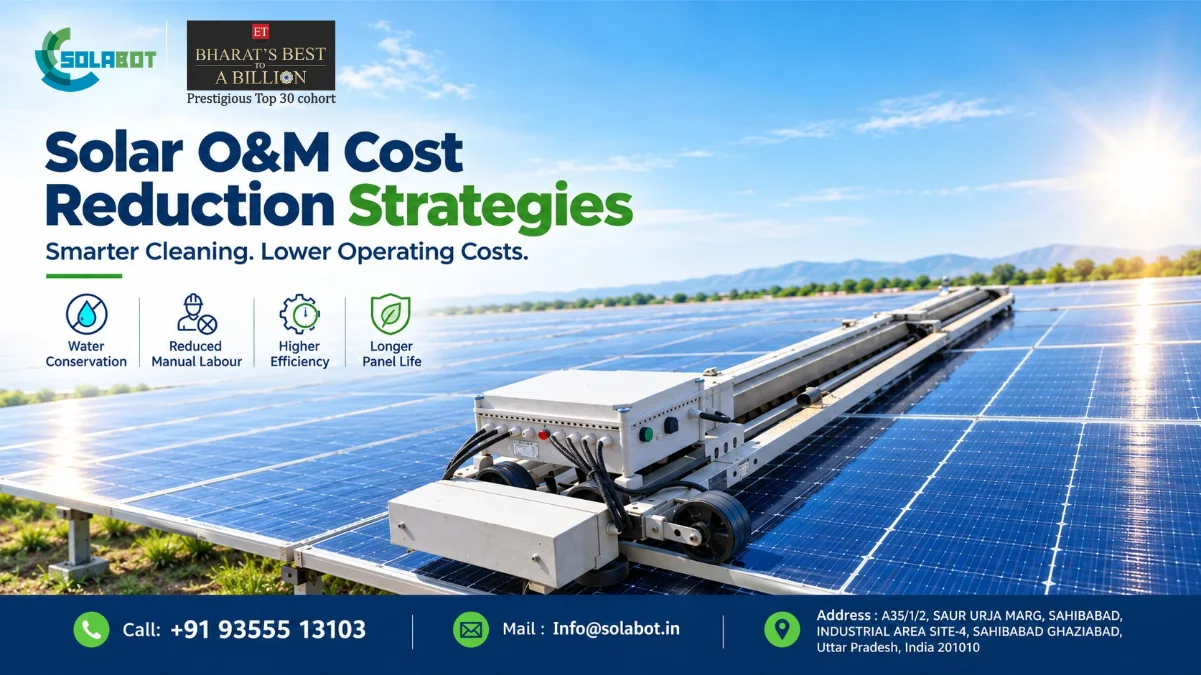
A Solar Module Cleaning Machine is specialized equipment developed to remove contaminants from photovoltaic modules. Depending on its design, it may be manual, semi-automatic, or fully robotic. Modern systems can use soft brushes, microfiber materials, sensors, remote monitoring, automated movement, and waterless cleaning technologies.
Why Do Solar Modules Need Regular Cleaning?
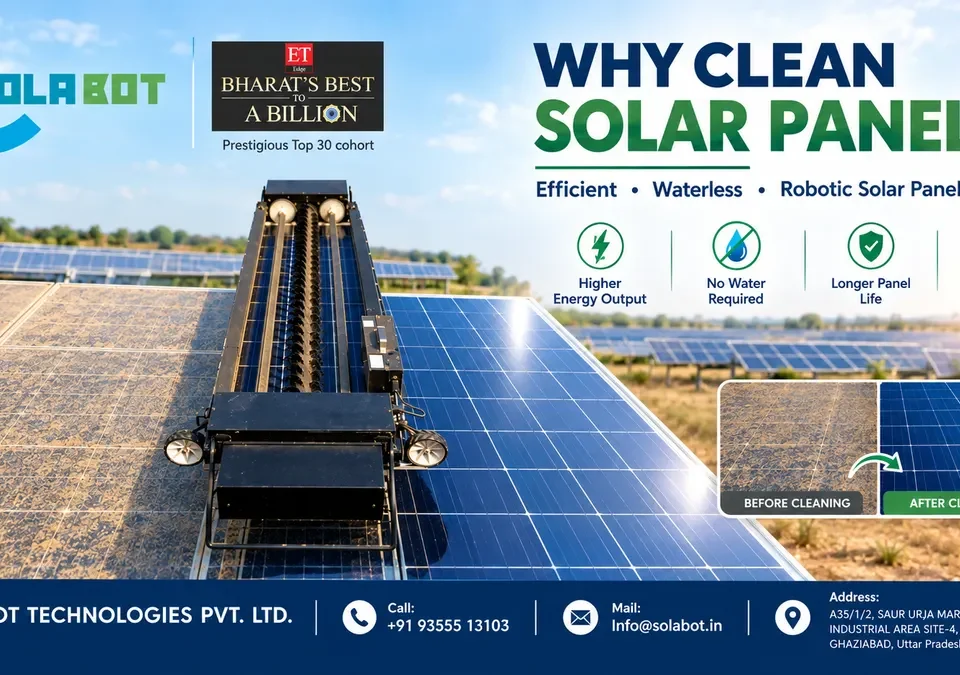
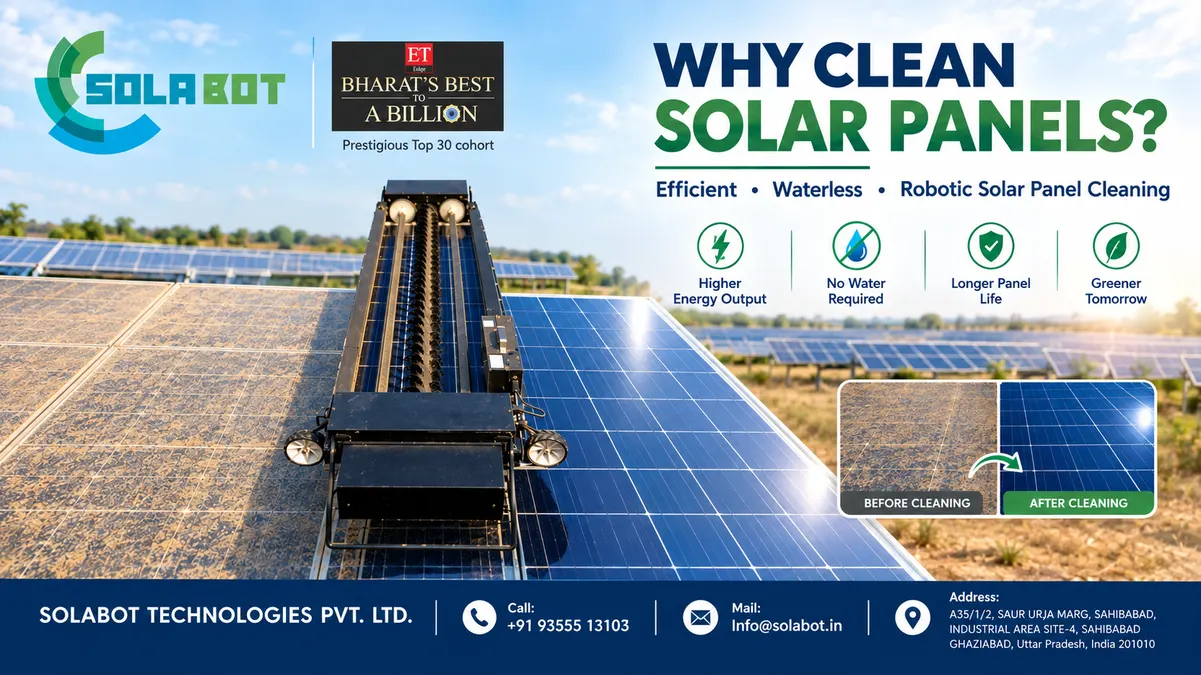
Solar modules require sunlight to generate electricity. When dust and other deposits accumulate on the surface, less sunlight may reach the photovoltaic cells. The effect of soiling varies according to local conditions, so there is no single cleaning schedule that suits every installation.
Common sources of contamination include dust, sand, pollen, bird droppings, leaves, industrial pollution, construction dust, salt deposits, and mineral residue after rain. In dry or highly polluted areas, contamination can develop quickly and make regular maintenance an important part of solar operations and maintenance.
Cleaning decisions should consider local soiling conditions, weather, module orientation, generation data, and operating costs.
How Does a Solar Module Cleaning Machine Work?
The operating principle depends on the machine design. Generally, the equipment is positioned on a module row or dedicated track, and a drive system moves it across the photovoltaic surface. Cleaning components then remove accumulated dust and debris.
Waterless equipment may use soft brushes, microfiber materials, airflow, or a combination of dry-cleaning methods. Water-based systems can use controlled water application with brushes or other mechanisms. Advanced robotic platforms may include sensors and control systems for navigation, movement monitoring, scheduling, and operational reporting.
A typical automated cycle can involve starting the scheduled program, moving across the module row, removing surface contamination, navigating the panel layout, completing the route, and returning to a charging or designated position. These systems are designed to make repetitive cleaning more consistent and reduce dependence on continuous manual intervention.
Main Types of Cleaning Machines
Manual Cleaning Machines
Manual machines are usually lightweight and operated by a technician. They can be useful for residential rooftops, small commercial systems, and sites where full automation is unnecessary. They reduce physical effort compared with traditional hand cleaning while still requiring an operator.
Semi-Automatic Cleaning Machines
Semi-automatic equipment provides a balance between manual operation and automation. An operator may position the equipment and control its movement while the cleaning mechanism performs repetitive work. This approach can suit medium-sized installations.
Robotic Cleaning Machines
Robotic systems are designed to travel along module rows with limited human intervention. They can support repeatable cleaning routines and are particularly relevant to large solar arrays. Many robotic systems are designed for waterless operation.
Benefits of Using a Solar Module Cleaning Machine
Reduced Manual Labor
Automation can reduce repetitive manual work. Large solar plants may contain thousands or millions of module surfaces, making manual cleaning a significant operational task. A machine can perform repeated cleaning cycles with less direct labor.
More Consistent Cleaning
Manual cleaning can be affected by labor availability, weather, site access, and scheduling. Automated equipment can support planned cleaning routines and provide greater consistency across large module areas.
Water Savings
Waterless cleaning technology can reduce dependence on water-based maintenance. This can be valuable for solar plants located in dry regions or areas where water transportation is costly. Some operators may combine regular dry cleaning with occasional wet cleaning for stubborn contamination.
Potential Recovery of Soiling-Related Generation
Dust accumulation can reduce solar output by limiting sunlight reaching photovoltaic cells. Cleaning therefore has the potential to recover generation affected by soiling. The actual improvement varies with location, contamination level, cleaning frequency, module characteristics, weather, and other site-specific conditions.
How to Choose the Right Solar Module Cleaning Machine
Choosing equipment should begin with the characteristics of the solar plant rather than simply selecting the most automated model.
Consider Plant Size and Layout
A small rooftop installation may require portable or semi-automatic equipment, while a multi-megawatt plant may need autonomous robotic cleaning. Module dimensions, row spacing, tilt angle, tracker configuration, and access paths can affect compatibility.
Check Cleaning Technology
Determine whether the system uses brushes, microfiber, airflow, water, or a combination. The cleaning mechanism should be appropriate for the module surface and contamination present.
Request a Site Demonstration
A demonstration can help confirm whether the system performs effectively with the actual module arrangement, surface conditions, contamination level, and access requirements.
Solar Module Cleaning Machine Cost
The price of a Solar Module Cleaning Machine varies according to its design and automation level. A small manual machine may cost considerably less than a fully autonomous utility-scale robot.
Factors affecting investment include cleaning capacity, automation, battery capacity, navigation technology, sensors, charging infrastructure, software, installation, spare parts, service contracts, warranty, and site-specific engineering.
Instead of comparing only purchase price, solar plant owners should evaluate total cost of ownership. This can include equipment cost, installation, maintenance, labor savings, water savings, expected generation recovery, and equipment lifespan.
Solabot Technologies Pvt Ltd.
Solabot Technologies Pvt Ltd. develops solutions for automated and robotic solar panel cleaning. Its solutions focus on reducing repetitive maintenance work and supporting efficient solar asset operations. Solar plant owners evaluating cleaning automation can consider the company’s technologies alongside site configuration, operating requirements, and maintenance objectives.
Maintenance Tips and Common Mistakes
Even automated cleaning equipment requires regular maintenance. Inspect brushes, microfiber components, wheels, tracks, batteries, motors, sensors, charging equipment, and communication systems. Follow the manufacturer’s maintenance schedule and inspect modules after cleaning for scratches, residue, cracks, or other issues.
Avoid excessive pressure or unsuitable brushes because they may damage module surfaces. Do not ignore water quality when using wet cleaning, since hard or mineral-rich water can leave deposits. Avoid fixed cleaning schedules without considering soiling, weather, performance, and operating costs. Most importantly, check equipment compatibility before purchase and evaluate total cost of ownership rather than only the initial price.
Conclusion
A Solar Module Cleaning Machine can make photovoltaic maintenance more systematic, efficient, and scalable. Automated and robotic technologies provide an alternative to relying entirely on manual cleaning, particularly for large installations and sites with challenging operating conditions.
The appropriate solution depends on plant size, module layout, contamination, water availability, labor requirements, maintenance needs, and total cost of ownership. Solar operators should evaluate these factors before selecting equipment and test compatibility under actual site conditions.
Solabot Technologies Pvt Ltd. With continued development in robotics, sensors, remote monitoring, and automated scheduling, Solar Module Cleaning Machine solutions are becoming an increasingly important part of modern photovoltaic operations and maintenance.