
Solar Panel Cleaning Machines in India – Solabot Technologies
September 10, 2026
Robots for Solar Plant Maintenance: A Smarter Way to Service Solar Panels
September 17, 2026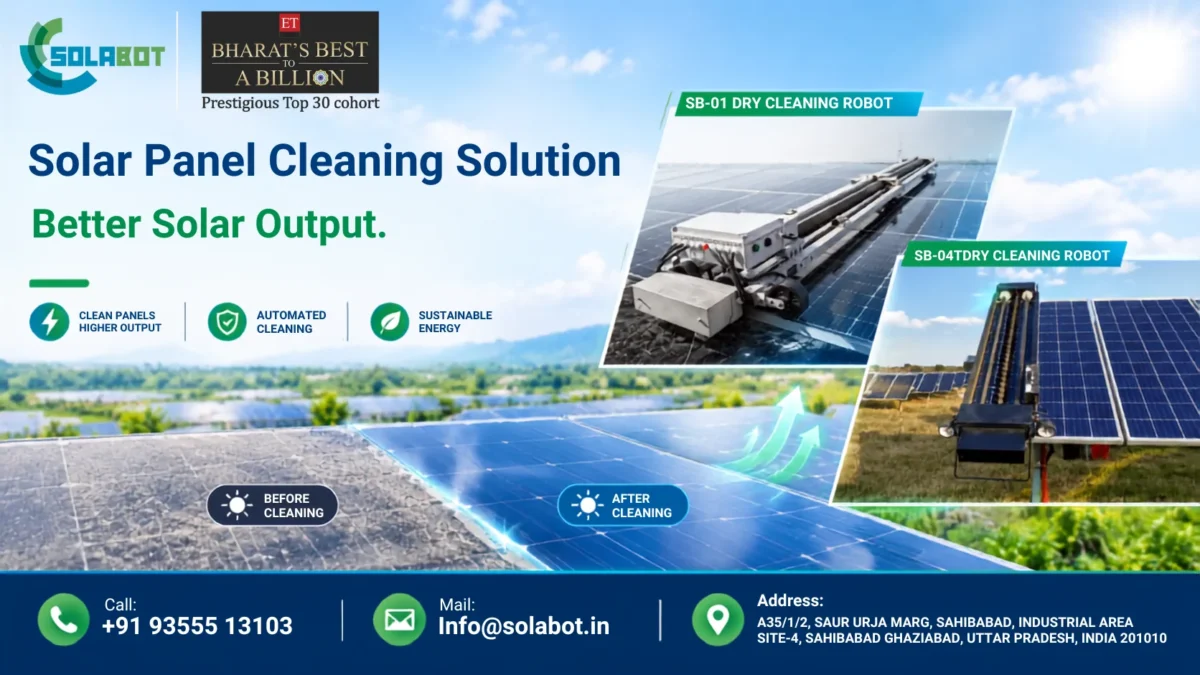
Solar Panel Cleaning Solution for Efficient Solar Energy Generation
Solar panels generate clean electricity for homes, businesses, factories, commercial buildings and utility-scale solar plants. But panels exposed to the outdoors will be constantly gathering dust, dirt, pollen, bird droppings, sand, pollution and water deposits. These contaminants can prevent the sunlight from reaching photovoltaics and can affect energy production. A good Solar Panel Cleaning Solution from Solabot can help maintenance by removing surface contamination without causing unnecessary damage.
Why Is It Important To Clean Solar Panels
The cleaner the surface of the panels, the more sunlight can reach the photovoltaic cells. Accumulation may be faster in dry, dusty areas, while areas with regular rain may wash away some loose contamination naturally.
Cleaning should therefore be viewed as part of solar operation and maintenance and not just a cosmetic exercise. A Solar Panel Cleaning Solution is to maintain a clean surface and protect the glass, coatings, seals, frames and other components of a solar panel.
Solar panel soiling reasons
During the lifetime of operation solar modules are exposed to different outdoor conditions. Typical pollutants include dust and soil from dry or unpaved areas, bird droppings (which can be very difficult to clean from glass), urban and industrial airborne pollution, pollen, leaves, organic material, sand and windblown fine particles. Minerals in hard water can also be left behind when the water evaporates.
What is Solar Panel Cleaning Solution?
Solar Panel Cleaning Solution is a product or mixture used for cleaning the surfaces of photovoltaic panels. It can help to loosen and remove dirt, stains, organic deposits and other contamination, while reducing the requirement for vigorous scrubbing.
Choose a cleaning product that is compatible with the photovoltaic glass and coatings, leaves very little residue after cleaning, rinses easily, has a safe cleaning action and offers clear dilution instructions and reasonable consumption of water for the size of the installation.
Benefits of Regular Panel Cleaning
Regular use of a Solar Panel Cleaning Solution can offer many practical benefits. Surface cleanliness is improved by removing accumulated contamination and this can help to reduce losses associated with soiling. The amount of energy gained depends on how soiled the panels have become before cleaning and local environment.
A cleaning method can also reduce the need for excessive physical force. This is important as aggressive brushing or scraping can damage glass surfaces or protective coatings over and over again.
Choosing the Best Cleaning Option
The selection of the suitable method will be related to the size of the installation, the type of contamination, the availability of water, the access conditions and the operating costs.
Proper cleaning products and soft brushes can be practical on residential roofs if used properly and safely. Businesses and industrial facilities may want professional cleaning crews, water-efficient equipment, automation or robotic cleaning technology.
The choice of Solar Panel Cleaning Solution should be based on the surface of the panel, type of contamination, the cleaning equipment and the recommendations of the manufacturer.
Cleaning the Solar Panels
A simple maintenance process could include the following steps:
1. Examine the Panels
Before starting, check for dust, bird droppings, stains, cracks, loose parts or other obvious damage.
2. Choose the Right Time
Cleaning in cooler weather makes the job easier and prevents rapid evaporation on hot glass.
3. Clean Up Excess Dust
Remove any loose particles by brushing lightly, then rinse with water or cleaning products as necessary.
4. Proper Use of the Product
Follow dilution recommendation and method of application. Use only as much as you need.
5. Employ non-scratching tools
The risk of scratching can be reduced by the proper use of soft brushes, suitable sponges or specially designed solar cleaning equipment.
6. Wash thoroughly
Rinse with clean water if needed to remove dirt and loosened cleaning residue. You’ll also want to consider the quality of the water, as mineral-rich water can leave spots.
7. See the Result
Before completing the maintenance task, check for any leftover streaks, deposits or contamination.
Water Quality and Cleaning
Water quality may impact the final appearance and cleanliness of solar modules. As hard water evaporates it leaves deposits of dissolved mineral matter. Professional operations may benefit from water treatment or proper rinsing procedures according to the particular local conditions.
Manual and Robotic Solar Cleaning
For a small installation it is possible to clean manually, but for a large solar plant you can be talking hundreds or thousands of modules. Cleaning of these systems manually can be very labour and water intensive.
Robotic cleaning systems may be an option for appropriate applications. Automation of cleaning can reduce routine labour and allow more consistent maintenance depending on the system design and site conditions.
A Solar Panel Cleaning Solution doesn’t have to be a separate product, but can be one aspect of a bigger cleaning plan. Choice of approach should be based on operators’ assessment of panel design, dust levels, access, availability of water, and frequency of cleaning and maintenance costs.
How often should you clean your solar panels?
There is no one schedule that fits all solar installations. Dust pollution, cleanliness frequency, rain, construction, agriculture, trees, bird activity Tilt of panels, seasonal conditions
There is no prescribed schedule for operators, but they can see the trends of soiling and energy production that are visible. If contamination is significant, or output drops unexpectedly, inspection and cleaning may be appropriate.
A Solar Panel Cleaning Solution can be useful for routine maintenance where cleaning is required and the product and method must be suitable for the conditions on site.
Solar Panel Cleaning in India
The climate and solar environment in India is very diverse. Dust can be a major problem in dry regions but urban and industrial locations may have higher levels of air pollution. Modules used in agricultural areas may be exposed to soil and organic particles.
Solar operators should tailor cleaning practices to actual site conditions because of the variations in conditions across the country. The Right Solar Panel Cleaning Solution with a proper maintenance process can help to keep the surfaces clean.
HOW NOT TO DO IT
Avoid the use of abrasive scrubbers, coarse brushes, aggressive scraping, inappropriate household chemicals and excessive pressure. Don’t step directly on solar panels. Do not use strong acid or alkaline products unless specific approval for the application has been given.
Why Solabot?
Solabot delivers solar-panel cleaning solutions and innovations in cleaning methods for solar installations. Its activities concern practical maintenance issues such as dust build-up, cleaning effort, water use and operational efficiency.
Here are some factors to consider when choosing the best Solar Panel Cleaning Solution for your business and solar operators, including size of installation, type of contamination, panel design and climate, available resources, and maintenance goals. A good combination of cleaning practices and monitoring can lead to better consistent solar maintenance.
Summary
Solar panels are installed outdoors for years and naturally get covered with dust, dirt from pollution, bird droppings, pollen, sand and other pollutants. A regular cleaning program will help keep the system operating consistently and will minimise soiling.
Choosing the Right Solar Panel Cleaning Solution is a careful process. Consider compatibility of panels, residue, water quality, cleaning equipment and site conditions. For larger installations, maintenance efficiency can also be achieved with automated or robotic methods.
Aggressiveness isn’t always the best cleaning strategy. It is the method that effectively removes contamination and preserves the surface of the panel, manages resources, and meets the operating needs of the site. Solar operators can keep panels cleaner and more able to reliably generate energy over the long term by scheduling regular inspections, cleanings and maintenance.