
Robotic Solar Panel Maintenance System | Solabot
October 15, 2026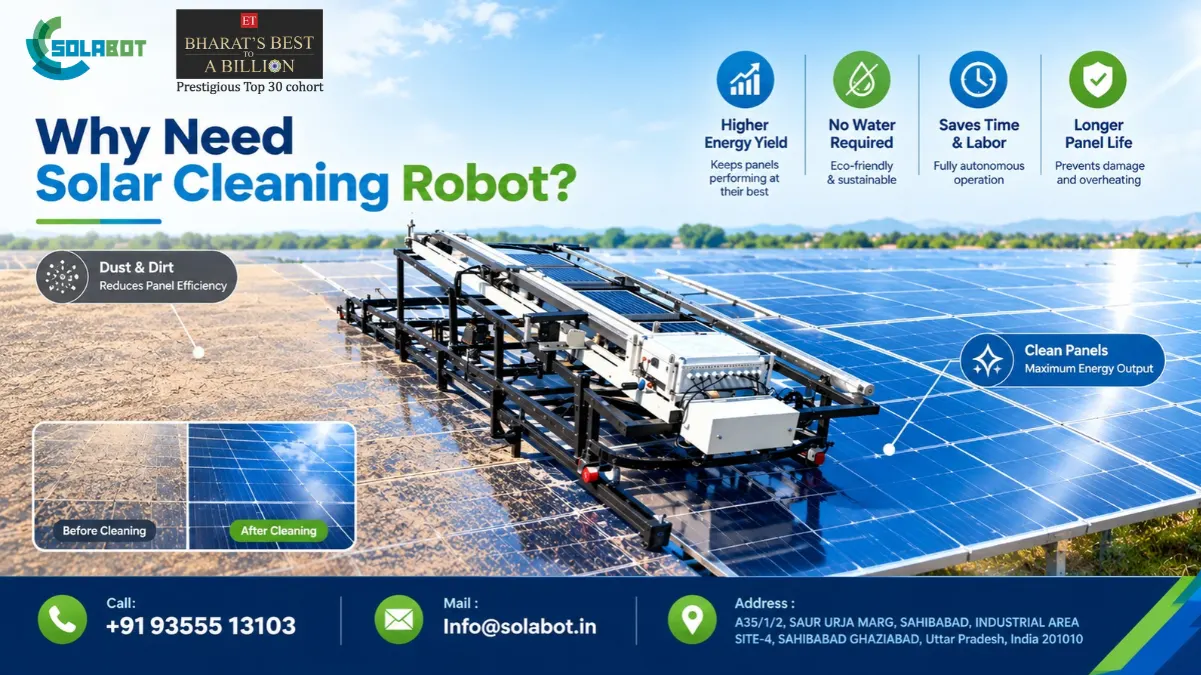
Why Is Solar Panel Cleaning Important?
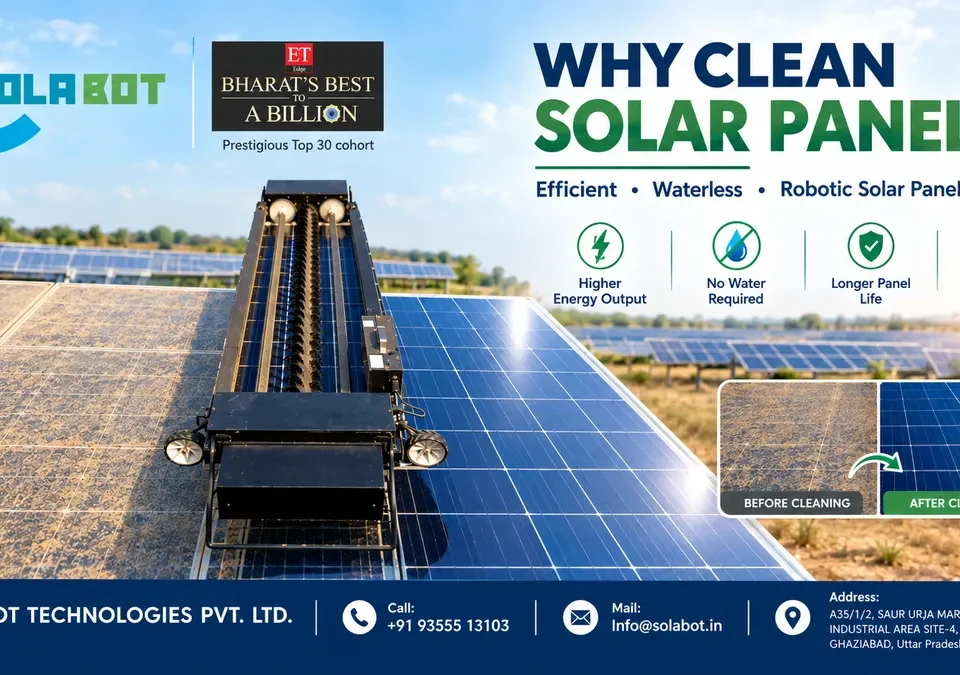
Solar panels stay outdoors throughout the year. Wind can carry dust onto the glass, and nearby roads or factories may add more dirt. When dirt builds up, the system may produce less electricity.
The question of why need solar cleaning robot systems matters to plant owners who want to maintain panel performance. A planned cleaning routine helps control dirt and supports steady system performance.
What Is a Solar Cleaning Robot?
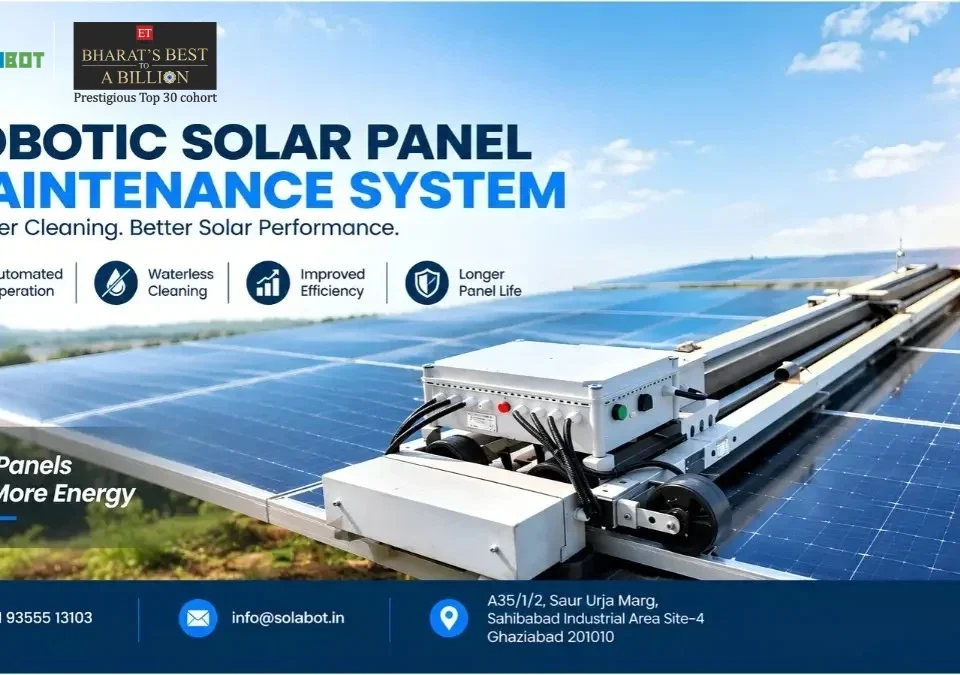
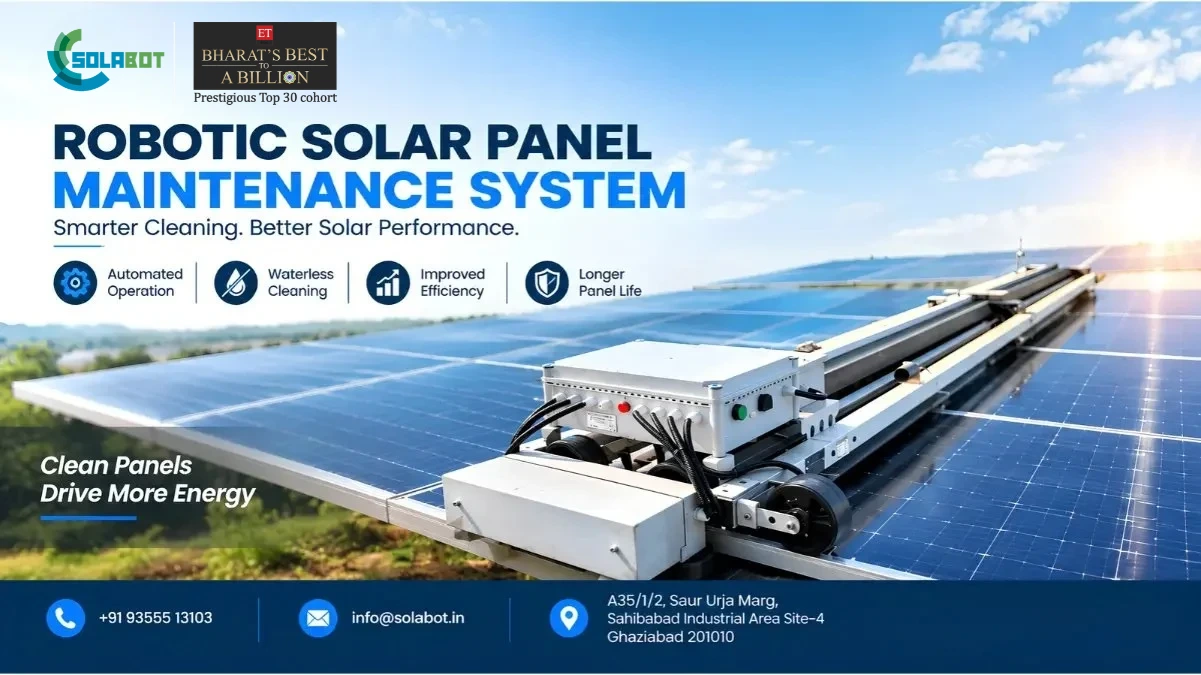
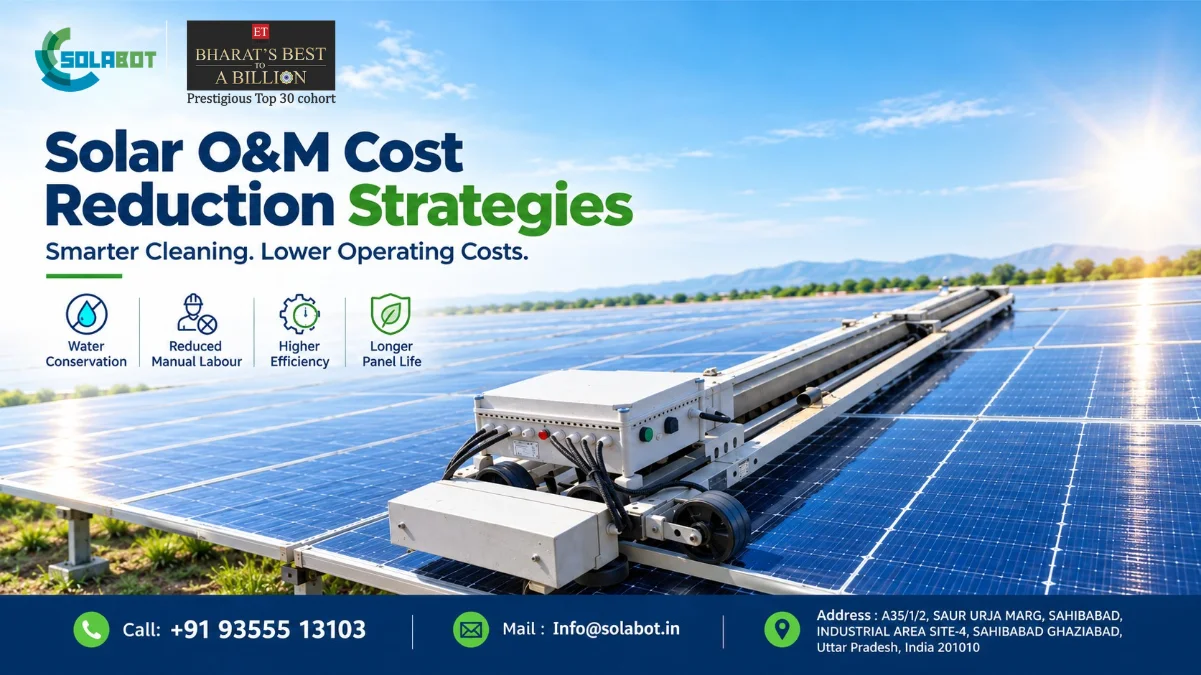
The question why need solar cleaning robot technology has a practical answer. A solar cleaning robot is a machine that moves along solar panels and removes loose dirt. Depending on the model, it may use soft brushes and a dry cleaning method.
Solabot focuses on robotic dry-cleaning solutions. Knowing why need solar cleaning robot technology starts with a simple point: robots can help teams clean panels in a more planned and repeatable way.
Main Benefits of a Solar Cleaning Robot
1. Lower Water Use
Water can be limited at solar sites in dry areas. Traditional washing may use a large amount of water, especially when a plant has many panels. This explains why need solar cleaning robot options can help save water. A dry-cleaning robot removes dust without routine water washing. This can reduce water needs and the cost of bringing water to remote sites. Water saving explains why need solar cleaning robot solutions matter.
2. Less Manual Work
Cleaning many panels by hand takes workers, time, and careful planning. A robot can handle repeated cleaning tasks on suitable panel rows. This can help staff spend more time on inspections and other maintenance work.
3. More Consistent Cleaning
Manual cleaning can vary from one worker or shift to another. A suitable robot can follow a set route and cleaning plan. This can help keep cleaning more consistent between maintenance visits. This shows why need solar cleaning robot equipment may help large sites.
4. Easier Maintenance Planning
Solar teams need a clear plan for cleaning and inspection. For busy sites, why need solar cleaning robot systems is clear: they can support routine schedules. Robotic cleaning can reduce the effort needed to organise large teams. Operators can choose cleaning times that fit site operations.
5. Support for Worker Safety
Cleaning solar panels may require workers to access rooftops, raised structures, or wide panel rows. These tasks can bring safety risks. A robot can reduce the need for workers to clean every panel directly. Workers must still follow safety rules and equipment instructions.
6. Care for Panel Surfaces
Suitable cleaning tools can remove dust while helping avoid unnecessary scratches. Solabot uses a soft-bristle cleaning approach for its dry-cleaning solutions. Panel manufacturers may set rules for brush type and cleaning pressure. Follow those instructions before using any robot. This is why need solar cleaning robot systems must be selected carefully.
Solar Cleaning Methods Compared
The question why need solar cleaning robot systems deserves a practical comparison. The table below shows important differences between manual and robotic cleaning.
| Factor | Manual cleaning | Robotic cleaning |
|---|---|---|
| Water use | May need water | Dry models can reduce water use |
| Labour | Needs hands-on work | Automates repeated tasks |
| Schedule | Depends on staff | Can support planned routines |
| Large sites | Needs team coordination | Helps manage repeated cleaning |
| Safety | Workers may access panel rows or rooftops | Can reduce direct cleaning work |
| Consistency | Can vary by worker | Can follow a repeatable route |
| Costs | Labour, water, and tools | Purchase, service, and running costs |
Actual results depend on the site, cleaning method, robot model, and operating conditions. Robots do not remove all maintenance or safety needs.
Where Are Solar Cleaning Robots Used?
Solar cleaning robots may suit large solar farms, commercial rooftops, industrial sites, and remote projects. Large solar farms can benefit from planned cleaning across many panel rows. Factories and warehouses may consider robots when their roof layout allows safe use. Remote sites may benefit from dry cleaning when water delivery is difficult or costly.
Some robots may work with solar tracking systems, but compatibility must be checked first. Before choosing equipment, confirm the panel size, row spacing, tilt, mounting design, and robot requirements.
Practical Points Before Installation
Before starting a cleaning programme, check the solar panel maker’s instructions and the robot’s operating guide. Remove objects that may block the robot’s path, and inspect the array for loose cables or damaged modules. Set a cleaning schedule based on local dust conditions rather than using the same interval at every site. Record energy output and cleaning activity to understand whether the routine is helping. This supports safer and clearer maintenance decisions.
How to Choose the Right Robot
First, check that the robot fits the solar panel layout. Panel size, row spacing, tilt angle, and mounting structure can affect operation. Next, review the cleaning method. The brush material and pressure should follow the panel maker’s guidance.
Compare the purchase price, maintenance needs, power supply, installation costs, and expected cleaning frequency. Ask why need solar cleaning robot technology fits your site and set clear goals, such as saving water or reducing manual work.
Why Choose Solabot Technologies?
Solabot Technologies develops robotic solutions for solar panel maintenance, with a focus on dry cleaning and automation. Its product range includes SB-01, SB-02, SB-04T, MDS, SB-RT, and SB-SCADA. The question why need solar cleaning robot technology matches your needs should be considered before buying. Contact Solabot to confirm current features and compatibility before choosing a model.
Dust levels, water access, labour costs, and panel design all matter when selecting a cleaning solution. A suitable robot can support a more organised maintenance plan, but performance and savings depend on real site conditions.
Conclusion
Clean panels help solar systems receive more sunlight. Dust can lower energy output, while manual cleaning may take time, water, and workers. A suitable robot can help make cleaning more regular and reduce some manual tasks.
Knowing why need solar cleaning robot technology helps owners choose wisely. Check panel compatibility, cleaning needs, running costs, and safety rules before making a choice. Solabot Technologies offers robotic cleaning options for solar installations. Visit at solabot.in to learn more and discuss your site requirements.