Solar Cleaning Service: Smarter Robotic Solutions for Efficient Solar Panel Maintenance
September 1, 2026
Solabot Rooftop Solar Panel Cleaning Robot
September 7, 2026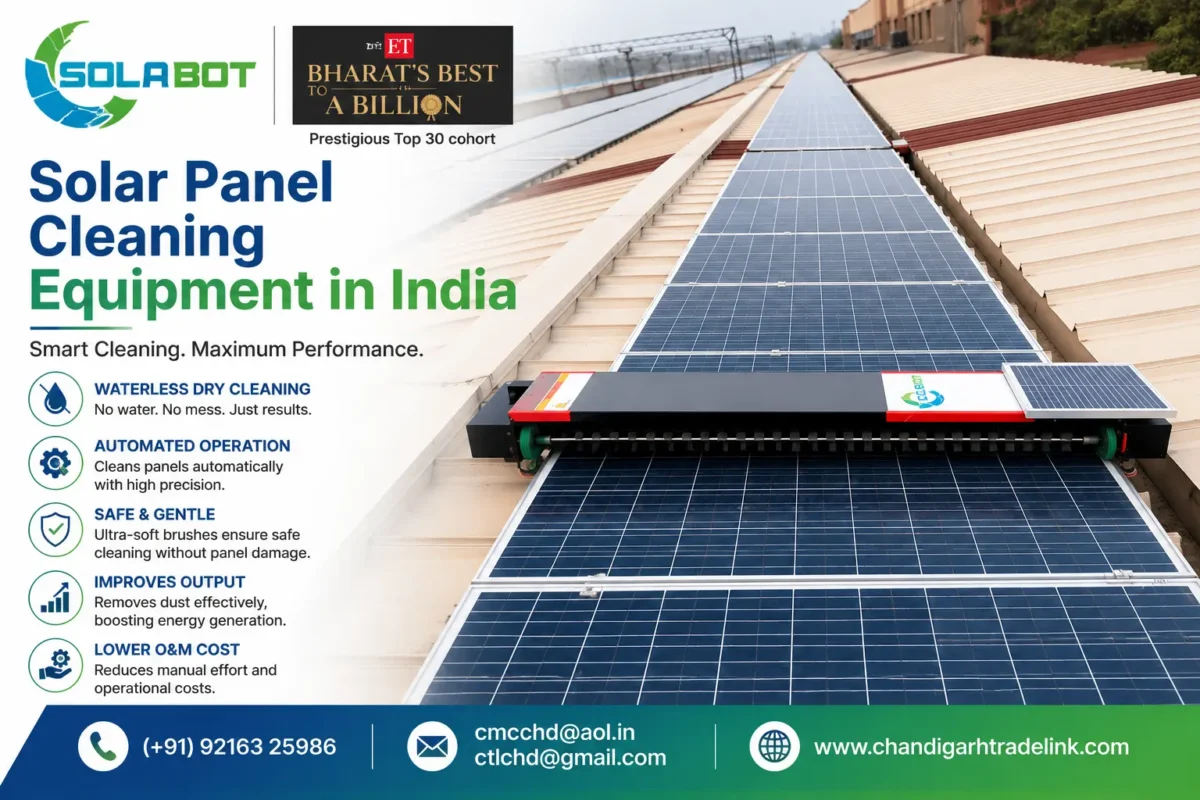
Solar Panel Cleaning Equipment in India: An Introduction
Solar energy is booming in India, with utility-scale solar farms, commercial rooftops, industrial installations, and residential solar systems becoming increasingly common. As solar energy adoption grows, keeping photovoltaic modules clean and efficient has become an integral part of solar plant operations and maintenance. Solar Panel Cleaning Equipment in India is helping solar operators adopt more efficient and automated approaches to regular panel cleaning.
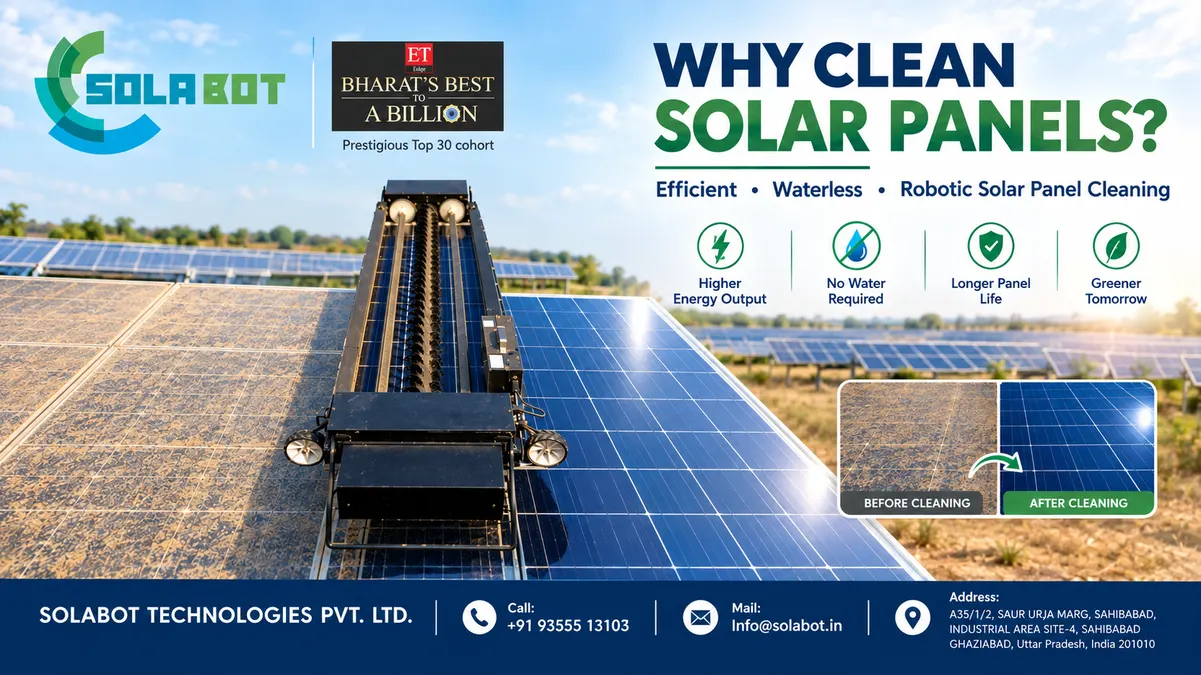
Soiling losses occur when dust, sand, pollen, bird droppings and other airborne particles soil solar modules. Regular cleaning of the surface condition of the panels helps to maintain the surface condition of the panels and gives uniform energy generation. Traditional cleaning methods require large manpower, water, equipment and operational planning, especially for large solar farms.
This is where the modern Solar Panel Cleaning Equipment in India can help to give a more efficient approach. Cleaning robots can automate repetitive cleaning chores, reducing manual labor and water-based cleaning.
Solabot Technologies Pvt. Ltd. specializes in robotic dry-cleaning solutions for solar panels. The company designs automatic and semi-automatic robotic systems designed for different solar applications such as utility scale solar plants, tracker mounted installations and otherphotovoltaic projects.
Why Solar Panel Cleaning Is Important
Solar panels are designed to capture sunlight and convert it into electricity. When dust and other contaminants accumulate on their surface, less sunlight may reach the photovoltaic cells. The resulting soiling can contribute to reduced energy production.
The frequency of cleaning depends on factors such as:
- Local dust conditions
- Rainfall
- Wind and sand exposure
- Panel inclination
- Agricultural or industrial surroundings
- Bird activity
- Seasonal weather conditions
- Type and scale of the solar installation
In areas with high dust accumulation, frequent cleaning can become a major operational task. Manual cleaning may also expose workers to difficult working conditions, especially when panels are installed over large areas or at elevated locations.
An automated cleaning strategy can help solar operators establish a more consistent maintenance routine.
What Is Solar Panel Cleaning Equipment?
Solar Panel Cleaning Equipment in India. equipment includes machines, brushes, robots, water-based systems, dry-cleaning tools, and automated technologies used to remove dust and contaminants from photovoltaic modules.
Traditional equipment may include water pumps, hoses, brushes, tractors, pressure-washing systems, and manually operated cleaning tools. While these methods can be suitable for certain applications, large solar farms may require significant resources to clean thousands or millions of panels.
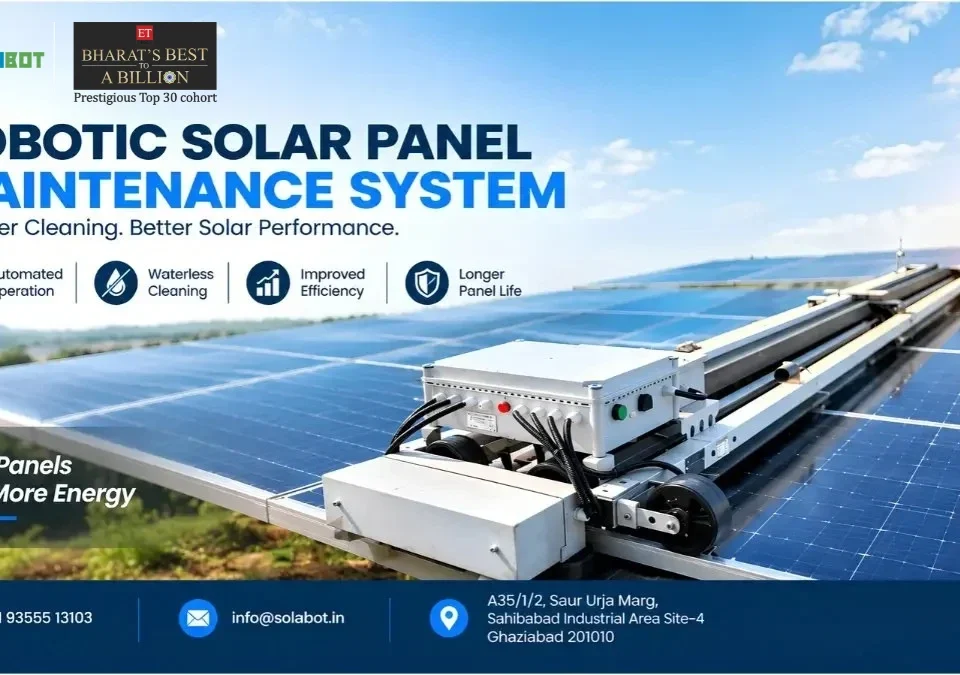
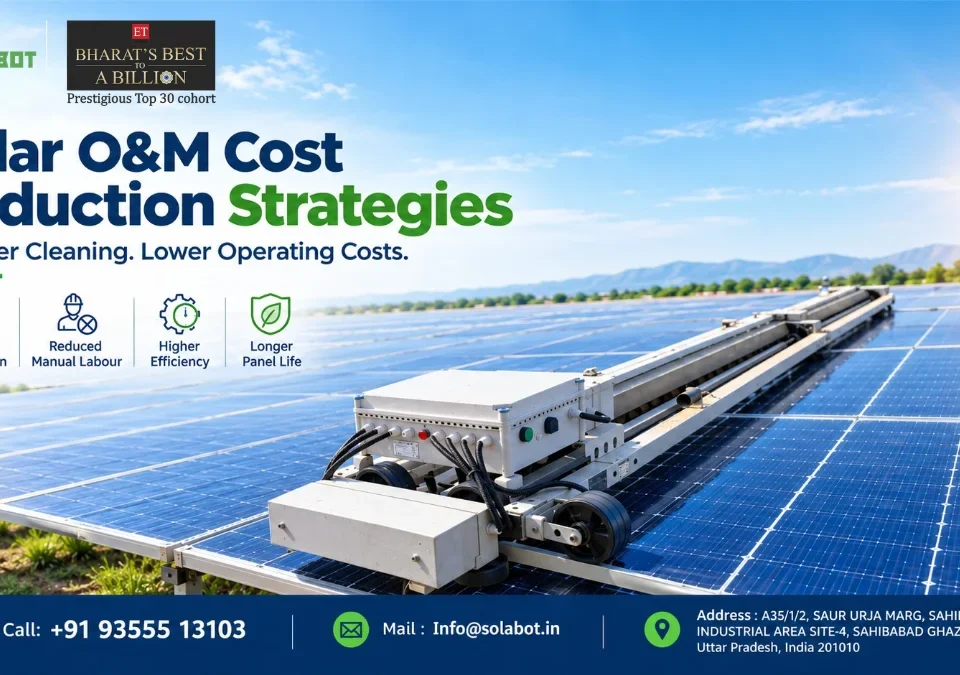
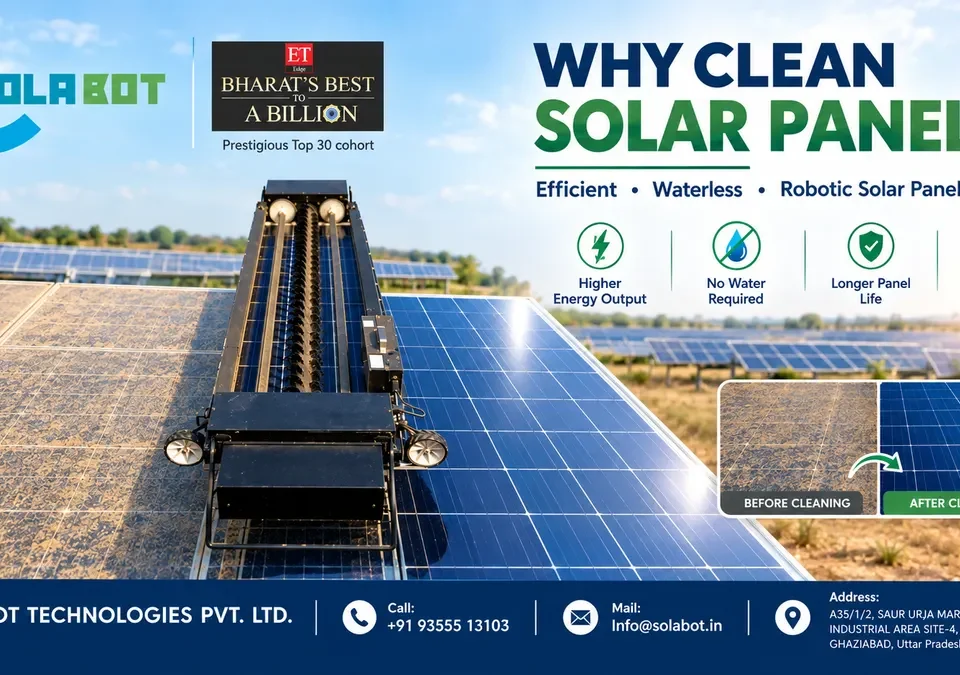
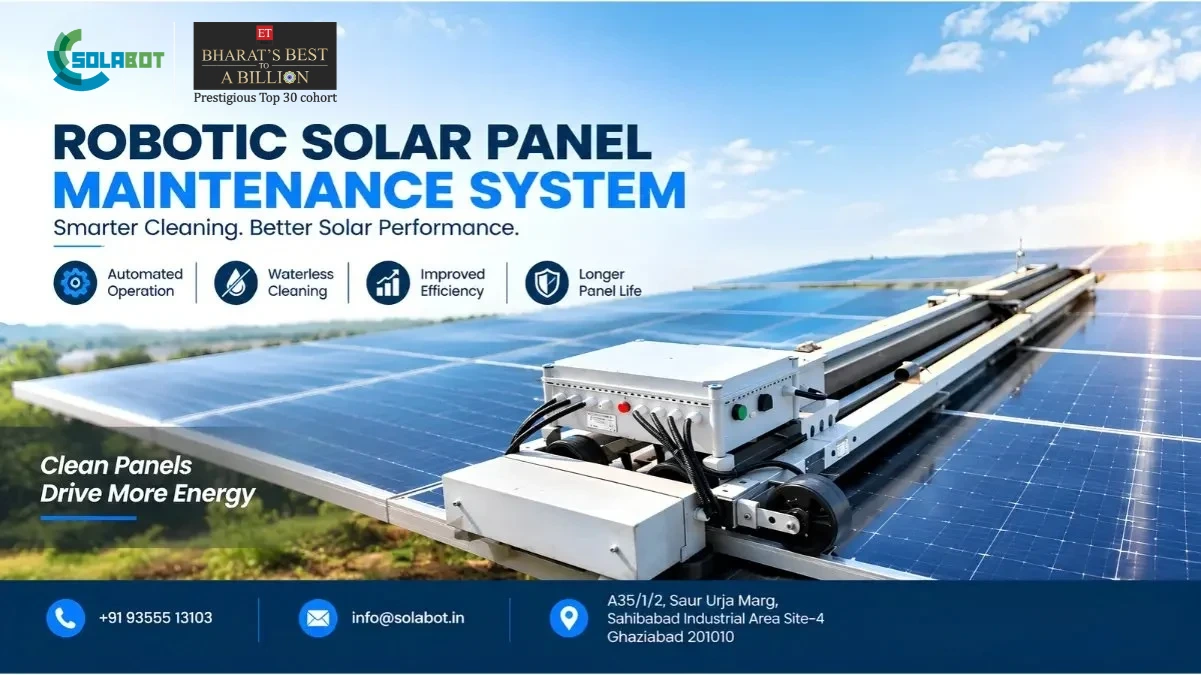
Robotic cleaning technology takes a different approach. Instead of depending entirely on manual workers, robotic systems can move across designated panel rows and clean the modules using specialized brushes.
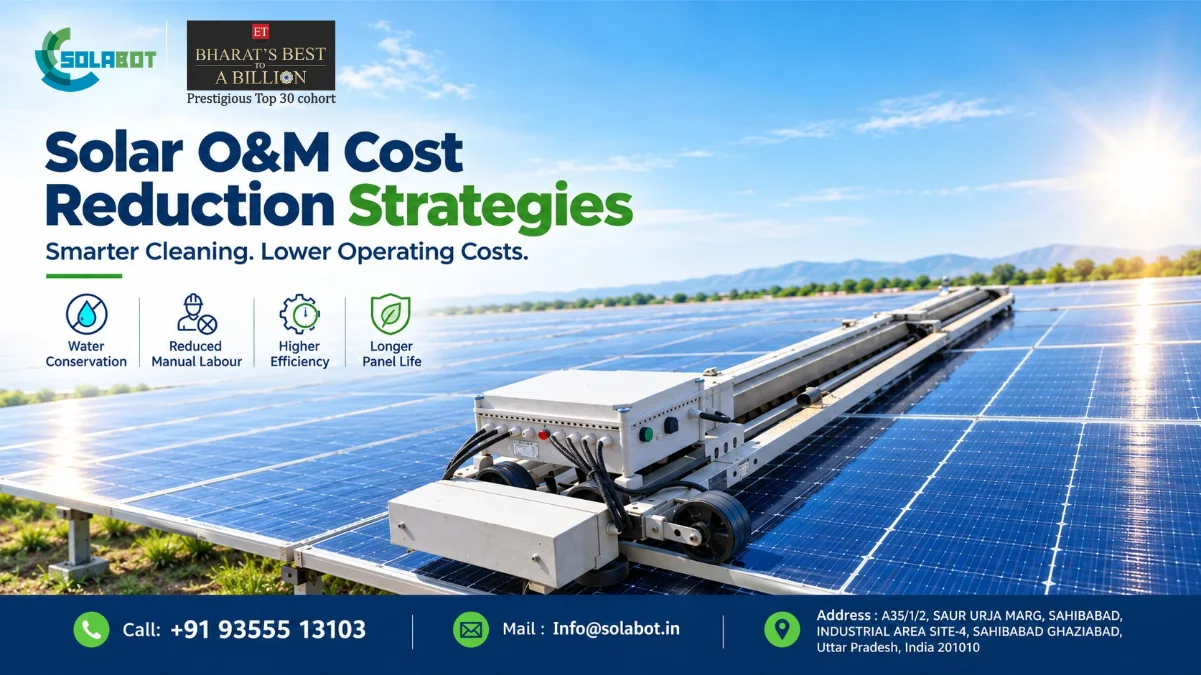
Solabot Technologies focuses on dry robotic cleaning technology. Its systems use ultra-soft PBT bristles and are designed to clean solar modules without conventional water-based washing.
Why Choose Robotic Solar Cleaning Technology?
The demand for Solar Panel Cleaning Equipment in India is increasingly connected with automation, water conservation, and operational efficiency. Robotic cleaning systems can offer several advantages for suitable solar installations.
- Waterless Cleaning
Water availability can be a significant concern for solar projects, particularly in dry and dusty regions. A dry-cleaning robot can remove dust without depending on large quantities of water.
Solabot’s robotic solutions are specifically designed around waterless dry-cleaning technology, helping solar operators reduce their reliance on water for routine panel cleaning.
- Reduced Manual Effort
Cleaning a large solar plant manually can involve substantial manpower. Automated robots can reduce the amount of human intervention required for routine cleaning operations.
For example, Solabot’s SB-01 is designed for automatic operation and can clean an entire row of solar panels. The robot can return to its docking station during non-cleaning periods and recharge its battery.
- Consistent Cleaning
A planned robotic cleaning schedule can make cleaning more systematic. Instead of waiting until panels become visibly dirty, operators can establish routine cleaning cycles according to site conditions.
Regular maintenance can be particularly valuable in locations where dust accumulation happens quickly.
- Soft Brush Technology
The cleaning mechanism is an important consideration when selecting solar cleaning machinery. Abrasive cleaning methods may create concerns about the panel surface.
Solabot’s robotic systems use ultra-soft PBT bristles intended for efficient cleaning while being suitable for photovoltaic module surfaces. The company also highlights polyurethane wheels and protective design features on selected models.
- Automation and Monitoring
Modern solar plants increasingly use digital monitoring systems to manage plant performance. Robotic cleaning can integrate with this operational environment.
Solabot’s SB-01 supports SCADA-based control and monitoring, allowing cleaning operations and relevant parameters to be managed through the plant’s control environment.
Solabot Technologies: A Specialist in Robotic Solar Cleaning
When evaluating Solar Panel Cleaning Equipment in India, solar plant operators need to consider more than the machine itself. Reliability, site compatibility, service support, automation, cleaning technology, and long-term maintenance are also important.
Solabot Technologies Pvt. Ltd. specializes in robotic dry-cleaning solutions for solar panels. According to the company’s published information, it has around 10 years of experience in the field and has deployed robotic solutions across multiple Indian states. The company states that it has installed more than 12,000 robots and completed more than 150 projects.
Solabot also states that its solutions have been developed for different solar cleaning applications and that it offers multiple robot configurations.
- Solabot SB-01 Automatic Dry Cleaning Robot
The SB-01 is designed as a fully automatic dry-cleaning robot for solar panels.
According to Solabot, the robot can clean a complete row of panels and then remain at a dedicated docking station outside cleaning hours. Its battery can be charged using solar energy, and cleaning cycles can be initiated through SCADA.
Key features include:
- Fully automatic operation
- Self-charging capability
- Manpower-less operation
- SCADA control and monitoring
- Daily cleaning capability
- Alarm and reporting functionality
- LiFePO4 battery
- MPPT charging
- Long-range communication
- Ultra-soft PBT bristles
- IP65 protection
These characteristics make the SB-01 a potential solution for large solar projects where automated daily cleaning is desirable.
- Solabot SB-03 Semi-Automatic Cleaning Robot
Not every solar plant requires a fully automated infrastructure. For already commissioned projects, a semi-automatic system can provide an alternative.
The SB-03 is designed as a plug-and-play, semi-automatic dry-cleaning robot. Solabot describes it as a waterless solution that can be used by site teams when required. It includes manual control, a portable battery, multi-row cleaning capability, and an auto-stop mechanism.This type of machine can be useful for projects looking for greater cleaning flexibility without implementing a completely automated system.
- Solabot SB-04T for Tracker-Mounted Solar Panels
Solar tracker installations create additional cleaning challenges because the modules move according to the sun’s position.
The SB-04T is specifically designed for tracker-mounted solar panels. Solabot describes it as a dry-cleaning robot that can operate on tracker systems and communicate with the plant’s SCADA environment. It also features self-charging, daily cleaning, alarms and reports, and self-decision-making capabilities.
- Mobile Docking Station for Solar Cleaning
For larger projects, equipment deployment and robot movement between rows can be an important consideration.
Solabot’s Mobile Docking Station is designed to move between solar rows and transfer automated robotic cleaning systems from one row to another. According to Solabot, the system can help reduce manpower requirements and optimize the number of robots needed for a solar project.
This type of centralized approach can be considered when designing an automated cleaning strategy for large solar plants.
How to Select the Right Solar Cleaning Equipment
Before purchasing Solar Panel Cleaning Equipment in India, project owners should evaluate several technical and operational factors.
Solar Plant Size
A small rooftop installation may require a different cleaning solution than a multi-megawatt solar farm. Equipment should be selected according to the number of modules and the required cleaning frequency.
Panel Configuration
Panel layout, row length, tilt angle, tracker configuration, and accessibility can influence equipment selection.
Water Availability
If water is limited or expensive, waterless robotic cleaning may offer a compelling operational alternative.
Automation Requirements
Determine whether the project requires manual, semi-automatic, or fully automatic cleaning.
Cleaning Frequency
Sites with high dust accumulation may benefit from frequent automated cleaning cycles rather than occasional manual washing.
Safety and Panel Compatibility
The robot should be designed to operate safely on the specific module type and installation configuration. Soft brushes, suitable wheels, controlled movement, and appropriate safety mechanisms are important considerations.
Benefits of Using Solabot’s Robotic Cleaning Solutions
Solabot’s approach combines automation with dry-cleaning technology. Depending on the model and application, the solutions can help solar operators address common challenges associated with manual cleaning.
Potential operational benefits include:
- Reduced dependence on manual cleaning
- Lower water consumption
- Regular cleaning schedules
- Automated operation
- Remote monitoring possibilities
- Reduced routine cleaning effort
- Adaptability to different solar applications
- Specialized solutions for tracker installations
Solabot states that its robotic cleaning systems can help reduce O&M costs and support solar power production by keeping modules cleaner. The company’s website reports that its systems can increase power production by up to 5%, although actual results will depend on site-specific soiling conditions, cleaning frequency, system design, and other factors.
Why Solar Panel Cleaning Equipment Matter
Solar Panel Cleaning Equipment in India has many regions where solar projects operate under hot, dry, and dusty conditions. In such environments, frequent water-based cleaning can become a significant operational requirement.
Waterless robotic cleaning offers an alternative approach by mechanically removing dust without routine water washing. This can be particularly relevant for utility-scale projects located in water-stressed regions.
For solar operators, reducing water consumption can support both operational planning and sustainability objectives.
The Future of Solar Panel Cleaning
The future of Solar Panel Cleaning Equipment in India is likely to be increasingly automated. As solar projects become larger and operators focus more closely on O&M efficiency, robotic technologies can play an important role in routine maintenance.
Artificial intelligence, sensors, communication systems, SCADA integration, autonomous navigation, and improved battery technologies can make robotic cleaning systems more capable.
Solabot is already developing multiple robotic configurations for different solar applications, including automatic, semi-automatic, rooftop, tracker-based, and mobile docking solutions.
Why Consider Solabot Technologies Pvt. Ltd.?
Solabot Technologies Pvt. Ltd. is focused specifically on robotic solar panel cleaning rather than general-purpose cleaning machinery. Its published portfolio includes multiple dry-cleaning robot configurations designed for different solar applications.
The company highlights its engineering and R&D capabilities, manufacturing infrastructure, service engineers, and customer support. It also states that its robots have been deployed across numerous Indian solar projects.
For solar developers, EPC companies, plant owners, and O&M teams looking to automate panel cleaning, selecting an experienced specialist can help simplify the evaluation process.
Conclusion
Solar panel maintenance is an essential part of protecting the performance of a photovoltaic installation. As India’s solar industry continues to expand, traditional manual cleaning methods may become increasingly difficult to manage at large scale.
Modern Solar Panel Cleaning Equipment in India can help solar operators move toward more automated, consistent, and water-efficient maintenance. Robotic dry-cleaning technology provides an alternative to conventional water-based cleaning while reducing repetitive manual work.
Solabot Technologies Pvt. Ltd. offers a range of robotic solutions, including the automatic SB-01, semi-automatic SB-03, tracker-focused SB-04T, and mobile docking solutions. These technologies are designed around waterless cleaning, automation, soft-brush technology, and, for selected systems, SCADA-based monitoring.
For solar developers, plant owners, EPC contractors, and O&M teams evaluating automated cleaning, the right solution should be selected according to the project’s specific module configuration, environmental conditions, cleaning requirements, and desired level of automation.
With a focus on robotic innovation and dry-cleaning technology, Solabot Technologies Pvt. Ltd. is positioned to support the evolving requirements of India’s solar energy industry.
Related posts