What Is the Price of an Automatic Solar Panel Cleaning System?
October 30, 2026
How Automated Cleaning Helps to Maintain Solar Performance and Reduce Manual Efforts
Solar panels are designed to generate electricity by converting sunlight into usable energy. However, because they are installed outdoors, their surfaces are continuously exposed to dust, sand, bird droppings, pollen, pollution, and other environmental particles. Over time, these contaminants can block sunlight from reaching the photovoltaic cells and affect the energy generated by the system.
Understanding Why Should You Clean Solar Panels is important for homeowners, commercial property owners, solar plant operators, and industries that depend on solar energy. Regular cleaning helps manage surface dirt, maintain solar panel performance, and support the long-term operation of a solar installation.
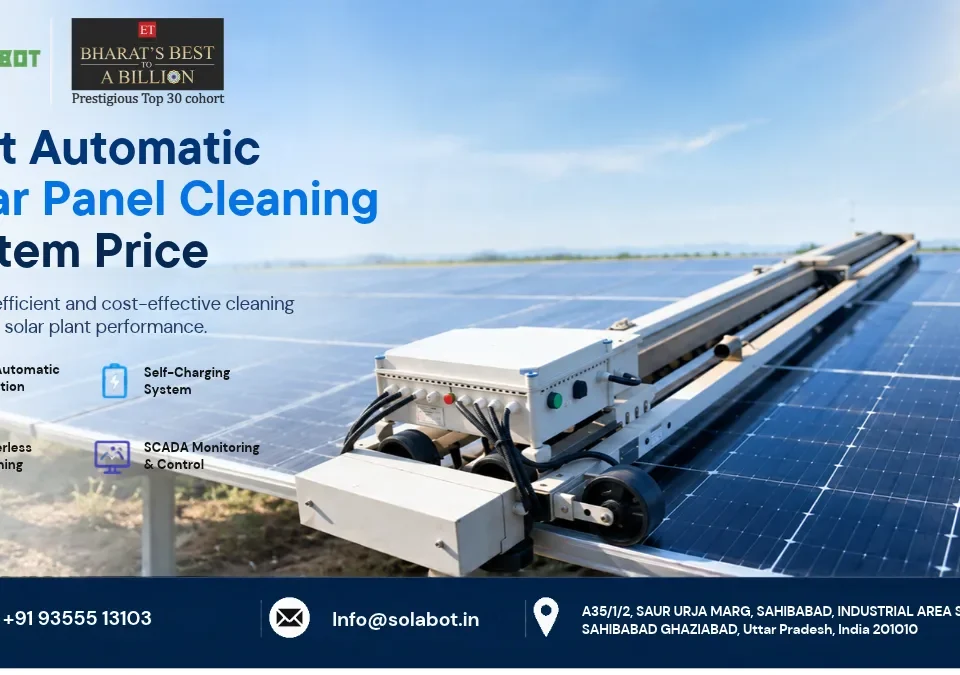
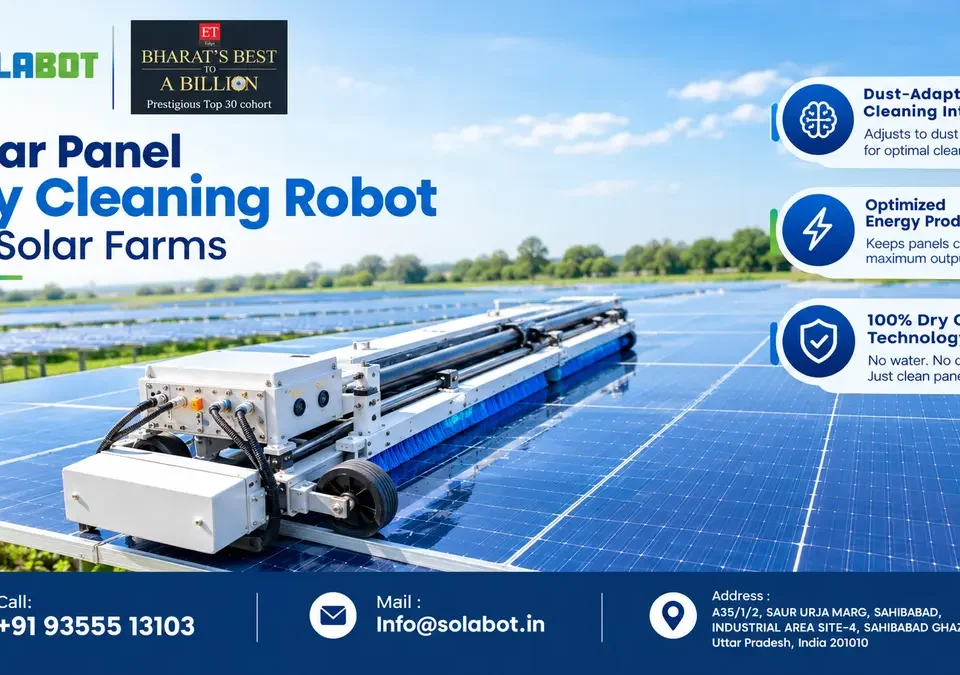
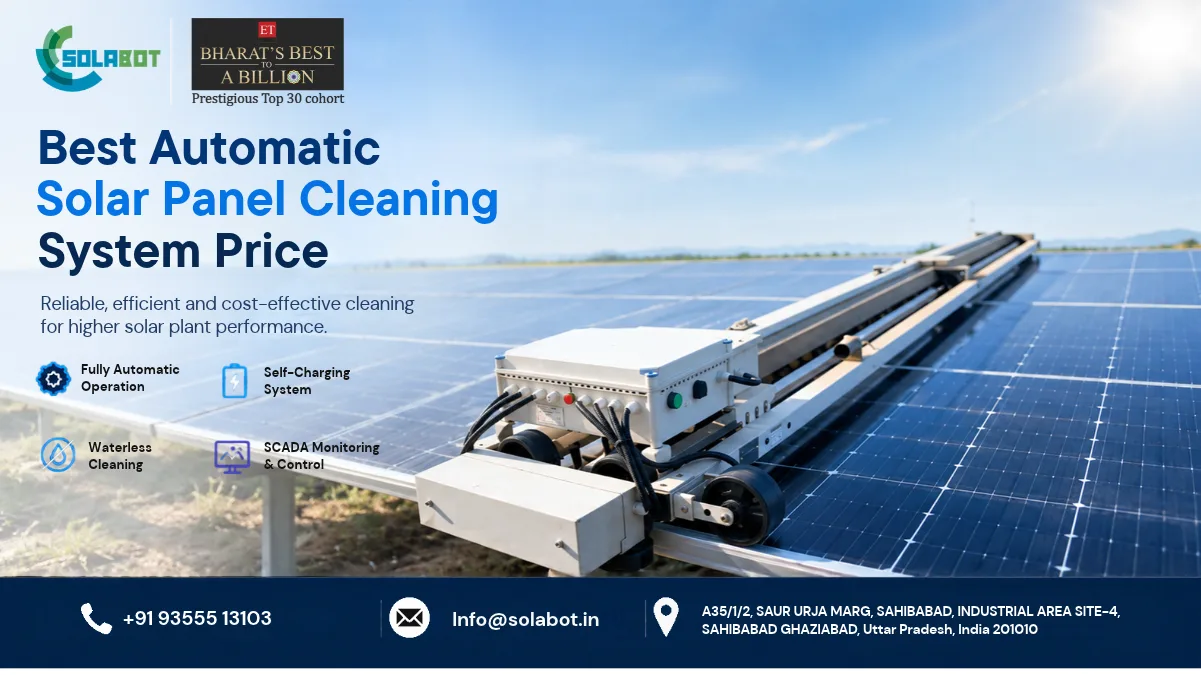
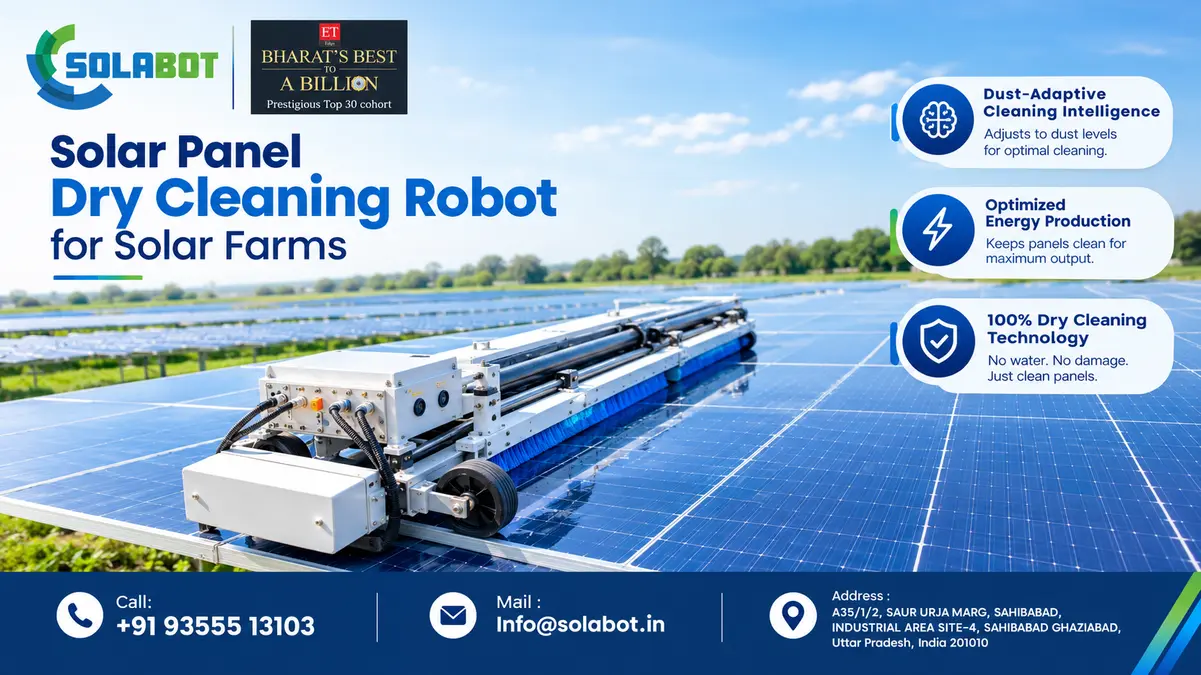
Solabot Technologies develops automatic robotic dry-cleaning solutions designed to reduce manual cleaning efforts and support efficient solar panel maintenance.
Why Should You Clean Solar Panels?
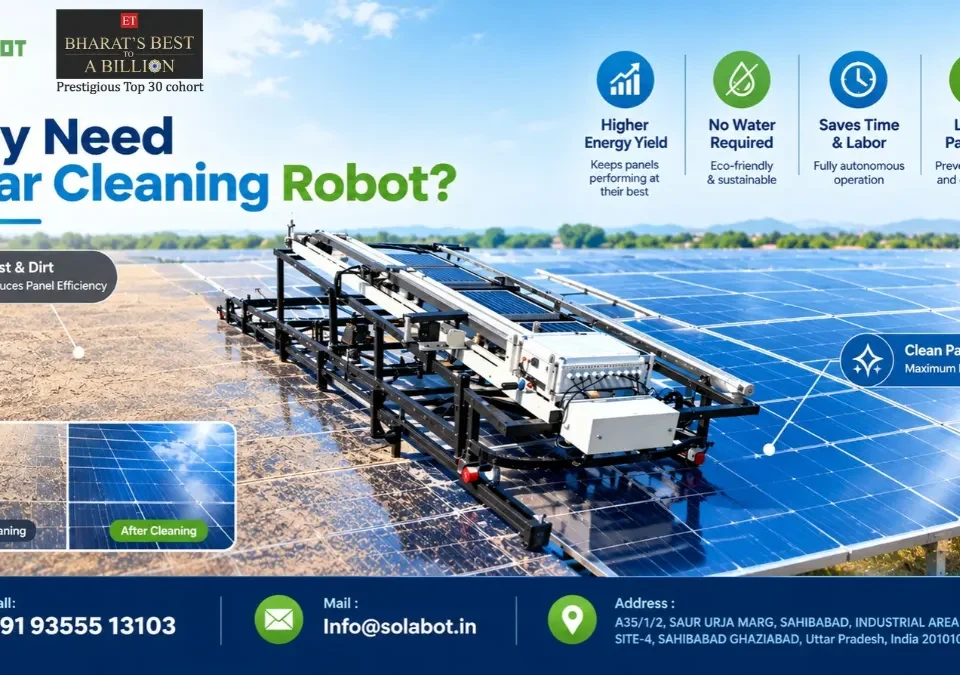
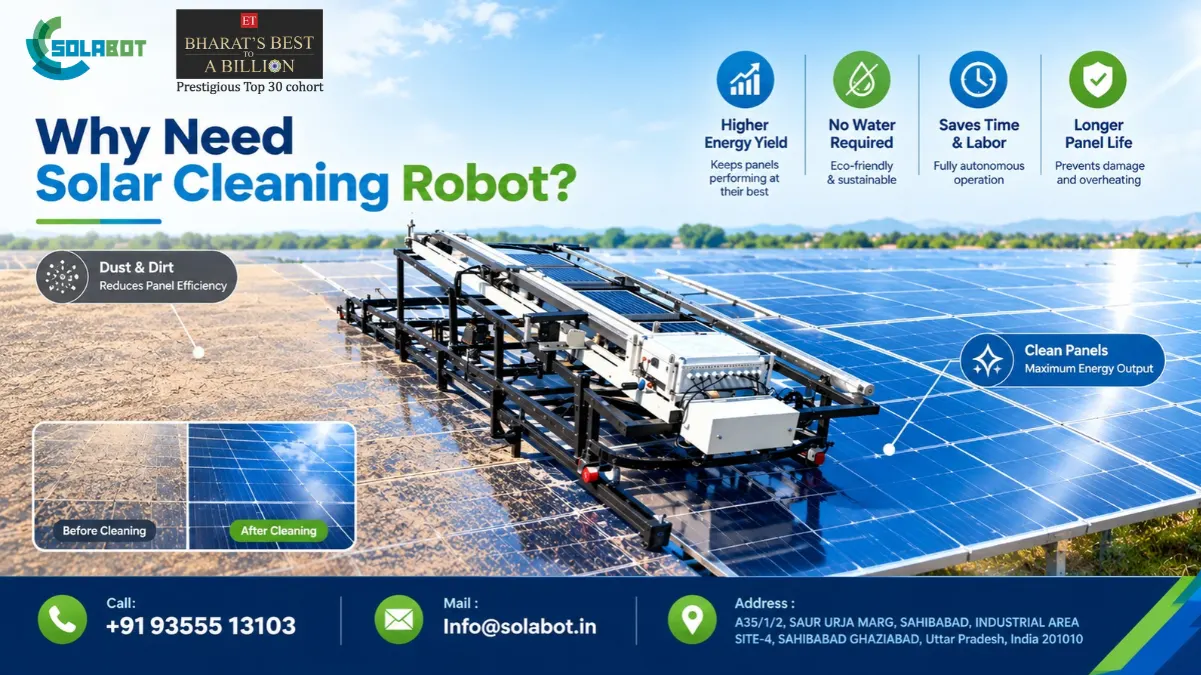
Solar panels need direct sunlight to generate electricity efficiently. When dust and dirt accumulate on their surfaces, they can reduce the amount of sunlight reaching the photovoltaic cells. This condition is commonly known as soiling.
The level of soiling depends on several factors, including the location of the installation, weather conditions, surrounding industries, rainfall, and the amount of dust in the air.
For example, solar panels installed near highways, construction sites, agricultural areas, and industrial locations may collect dirt more frequently. In large solar plants, even small amounts of dust across thousands of modules can become an important maintenance concern.
Knowing Why Should You Clean Solar Panels helps solar owners understand that cleaning is not simply about appearance. It is an important part of regular solar operation and maintenance.
Effects of Dust and Dirt on Solar Panels
Dust and other contaminants can affect solar panel performance in different ways. The impact depends on the type of dirt, how much has accumulated, and how long it remains on the surface.
Common contaminants include:
- Dust and Sand: Fine particles settle on the glass surface and reduce sunlight exposure.
- Bird Droppings: These can create concentrated dirty patches that may be difficult to remove.
- Industrial Pollution: Airborne particles and residues can collect on panels near factories and industrial areas.
- Leaves and Pollen: Organic material can accumulate on the surface and around panel edges.
- Mud and Water Deposits: Rainwater may leave mineral deposits or dirt marks after drying.
When these materials remain on the panels, they can contribute to energy-generation losses. The actual impact varies from one installation to another, so performance should be assessed using site-specific monitoring data.
Benefits of Regular Solar Panel Cleaning
Understanding Why Should You Clean Solar Panels starts with recognising the practical benefits of regular maintenance. A planned cleaning routine can help reduce soiling and keep the panel surface in better operating condition.
Some important benefits include:
1. Better Sunlight Exposure
Removing accumulated dust and dirt allows more sunlight to reach the photovoltaic cells. This can help reduce energy losses associated with surface soiling.
2. More Consistent Energy Generation
Regular cleaning can support more consistent panel conditions, particularly in locations where dust accumulates quickly.
3. Improved Maintenance Planning
A planned cleaning schedule helps operators manage maintenance instead of waiting until panels become heavily soiled.
4. Reduced Manual Cleaning Effort
Automated cleaning systems can reduce the need for workers to perform repetitive cleaning across large solar installations.
5. Better Water Management
Dry-cleaning technology can reduce dependence on conventional water-based washing, which is useful in locations where water availability is limited.
6. Support for Long-Term Solar Operations
Keeping panels clean and following suitable maintenance practices helps operators manage their solar assets more effectively.
Why Is Waterless Solar Panel Cleaning Important?
Traditional solar panel cleaning often involves water, cleaning equipment, and manual labour. Although water-based cleaning may be suitable for certain installations, it can become difficult to manage across large solar farms or in areas with limited water resources.
Waterless cleaning offers another approach. Instead of depending on conventional washing, dry-cleaning systems use specialised brushes and mechanical cleaning methods to remove loose dust and surface contaminants.
For solar installations in dry and dusty regions, this approach can help reduce water requirements and make regular cleaning easier to organise.
When considering Why Should You Clean Solar Panels, water availability is an important factor. The cleaning method should match the type of contamination, panel manufacturer’s recommendations, and site conditions.
Solabot Technologies focuses on robotic dry-cleaning solutions that support waterless solar panel maintenance. Its website highlights automatic cleaning machines, self-powered systems, and ultra-soft PBT brushes.
Why Use Robotic Solar Panel Cleaning Systems?
Cleaning a small rooftop installation may be manageable with suitable equipment and trained personnel. However, large solar farms contain extensive rows of modules that require repeated cleaning.
Manual cleaning across these installations can involve considerable workforce coordination, travel, equipment handling, and safety planning.
Robotic cleaning systems help automate repetitive cleaning activities. Depending on the model and installation design, a robot can move along designated panel rows and use its cleaning mechanism to remove accumulated dust.
Important advantages of robotic cleaning include:
- Reduced dependence on repetitive manual work.
- Support for planned and regular cleaning cycles.
- Less reliance on conventional water-based washing when using dry-cleaning technology.
- More consistent cleaning operations across large panel arrays.
- Better coordination of routine solar maintenance.
For large solar projects, understanding Why Should You Clean Solar Panels also means considering how cleaning can be performed efficiently and safely.
Solabot’s Robotic Solar Panel Cleaning Solutions
Solabot Technologies offers different robotic cleaning solutions for solar installations with varying layouts and operating requirements. The suitable system depends on the project size, panel arrangement, and required level of automation.
| Solution | Application or Purpose |
|---|---|
| SB-01 Dry Cleaning Robot | Fully automatic cleaning with self-charging and monitoring features |
| SB-03 Dry Cleaning Robot | Semi-automatic cleaning with manual control and portable battery operation |
| SB-04T Dry Cleaning Robot | Robotic cleaning designed for tracker installations |
| Mobile Docking Station | Supports robot docking and self-charging operations |
| SB-RT Rooftop Cleaning Robot | Designed for rooftop solar panel cleaning |
| SB-SCADA | Monitoring and control support for robotic cleaning operations |
These solutions are designed for different solar project requirements. Before selecting a system, operators should evaluate panel dimensions, row configuration, installation type, cleaning frequency, and site conditions.
How Often Should Solar Panels Be Cleaned?
There is no single cleaning schedule that works for every solar installation. The required frequency depends on local environmental conditions and how quickly dirt accumulates.
Solar panels located in dusty regions or near industrial areas may require more frequent cleaning than installations in locations with lower dust levels.
Before deciding on a schedule, consider:
- Local dust and pollution levels.
- Rainfall and seasonal weather conditions.
- Solar panel tilt and installation design.
- Energy-generation data and soiling measurements.
- Recommendations from the panel manufacturer.
Monitoring energy output and inspecting panel surfaces can help operators decide when cleaning is necessary. Avoid unnecessary cleaning, as unsuitable tools or aggressive methods may damage the glass or protective coatings.
Why Choose Solabot Technologies?
Solabot Technologies pecialises in robotic dry-cleaning solutions for solar panels. The company states that it has 10 years of experience in developing automatic cleaning systems for commissioned and under-construction solar projects.
Its solutions focus on reducing manual effort and supporting waterless cleaning operations across different solar installation types.
For businesses and solar plant operators exploring Why Should You Clean Solar Panels, Solabot offers different robotic options that can be evaluated according to project requirements. The right solution should be selected after reviewing the installation layout, cleaning needs, and expected operating conditions.
Looking for Automatic Solar Panel Cleaning Solutions?
Solabot Technologies provides robotic dry-cleaning solutions for solar panel maintenance. Whether you manage a rooftop installation or a large solar plant, the company can help you explore suitable cleaning technologies based on your project requirements.
Contact Solabot Technologies Pvt. Ltd.
- Phone: +91 93555 13103
- Email: Info@solabot.in
- Location: Sahibabad Industrial Area, Ghaziabad, Uttar Pradesh, India.
The Solabot Technologies to explore its robotic solar panel cleaning solutions.
Conclusion
Solar panels are continuously exposed to outdoor conditions, making dust and dirt accumulation a regular maintenance challenge. Cleaning helps reduce surface soiling, improve sunlight exposure, and support consistent solar plant operations.
Understanding Why Should You Clean Solar Panels allows homeowners, businesses, and solar plant operators to make better maintenance decisions. Regular inspections, suitable cleaning methods, and planned maintenance can help keep solar installations in good operating condition.
For large installations, robotic dry-cleaning technology can reduce repetitive manual work and dependence on conventional water-based cleaning. Solabot Technologies offers different robotic solutions to support these requirements.