Automatic Solar Farm Cleaning Equipment by Solabot Technologies Pvt. Ltd.
July 14, 2026
Buy Solar Panel Dry Cleaning Robot in Bikaner from Solabot Technologies Pvt. Ltd.
July 30, 2026
Solar Panel Dust Cleaning Robot: The Future of Efficient Solar Panel Maintenance
Solar energy has become one of the most important sources of clean and renewable power worldwide. From residential rooftops to large-scale solar power plants, photovoltaic (PV) panels are being installed at a rapid pace. However, solar panels need regular maintenance to perform at their best. Dust, sand, dirt, pollen, bird droppings, and other environmental contaminants can accumulate on the surface of solar modules and reduce their ability to absorb sunlight efficiently.
Traditional solar panel cleaning methods often involve manual labor, water, brushes, and cleaning equipment. Although these methods can remove dirt, they may also be time-consuming, expensive, and unsuitable for large-scale solar installations. This is where robotic automation is changing the solar industry.
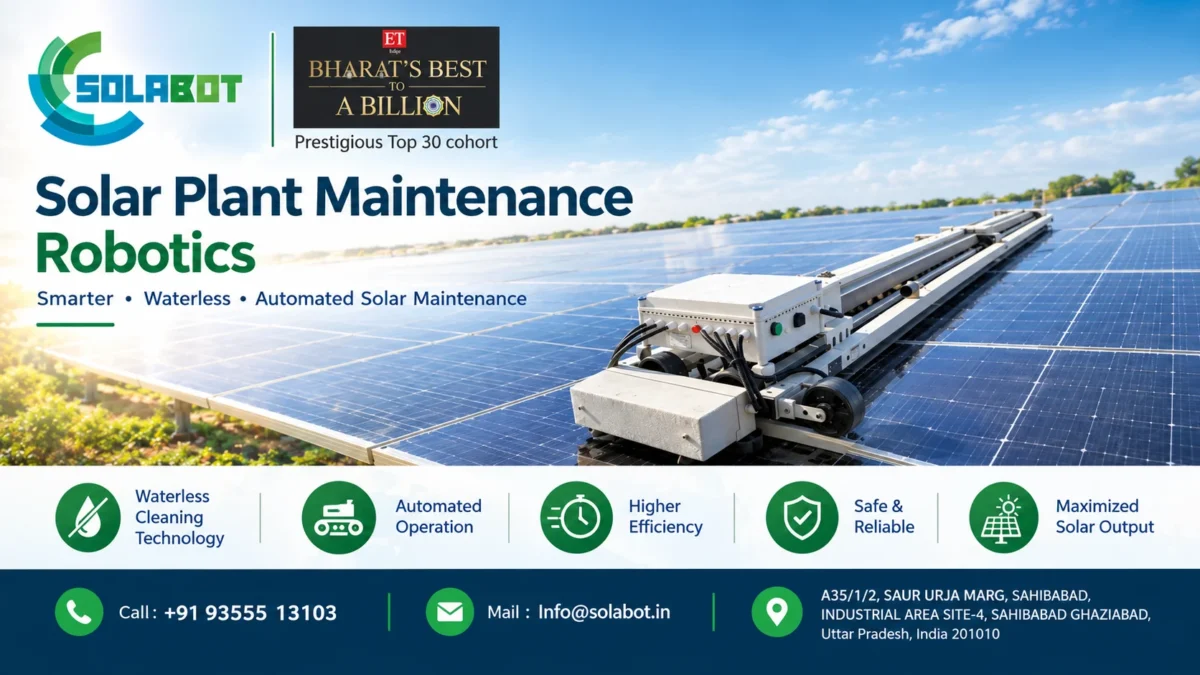
A Solar Panel Dust Cleaning Robot offers an advanced, efficient, and smart solution for maintaining solar panels. Designed to remove accumulated dust and dry particles from solar modules, robotic cleaning systems can help solar plant operators improve maintenance efficiency while reducing dependence on manual labor and water-based cleaning methods.
Solabot Technologies Pvt. Ltd. is developing innovative robotic solar panel cleaning solutions designed for the changing needs of modern solar power plants, commercial installations, and utility-scale solar projects. Through advanced automation and robotic technology, Solabot aims to make solar panel maintenance more efficient, sustainable, and reliable.
Why Solar Panel Cleaning Is Important
Solar panels work by converting sunlight into electricity. When dust and dirt accumulate on the surface of the panels, they can block a portion of the sunlight reaching the photovoltaic cells. This can negatively affect the overall performance and energy generation of the solar installation.
The level of dust accumulation depends on several factors, including:
- Location of the solar plant
- Climate and weather conditions
- Nearby construction activity
- Desert or semi-arid environments
- Agricultural dust and pollen
- Traffic pollution
- Wind conditions
- Bird activity
- Rainfall frequency
In regions with high dust levels and limited rainfall, solar panel cleaning becomes an essential part of regular operation and maintenance. A well-planned cleaning strategy can help solar plant owners maintain better panel performance and reduce the impact of soiling.
For small installations, manual cleaning may be manageable. However, large solar farms can contain thousands or even millions of solar panels. Cleaning such installations manually requires significant manpower, time, and operational planning. Robotic solutions provide a more scalable alternative.
What Is a Solar Panel Dust Cleaning Robot?
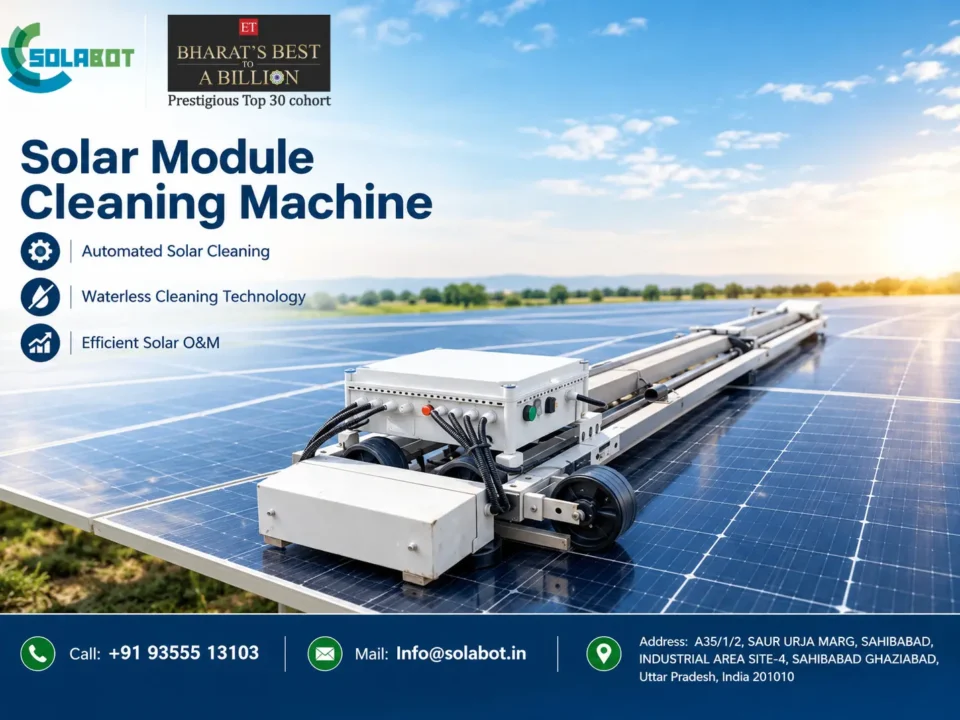
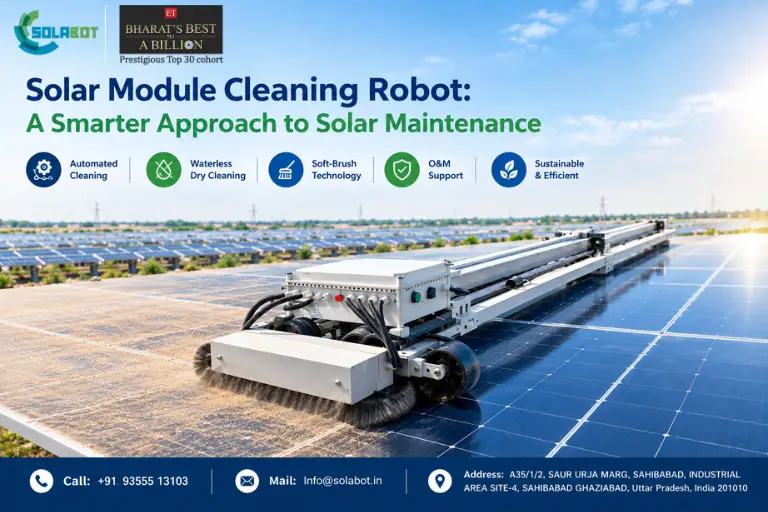
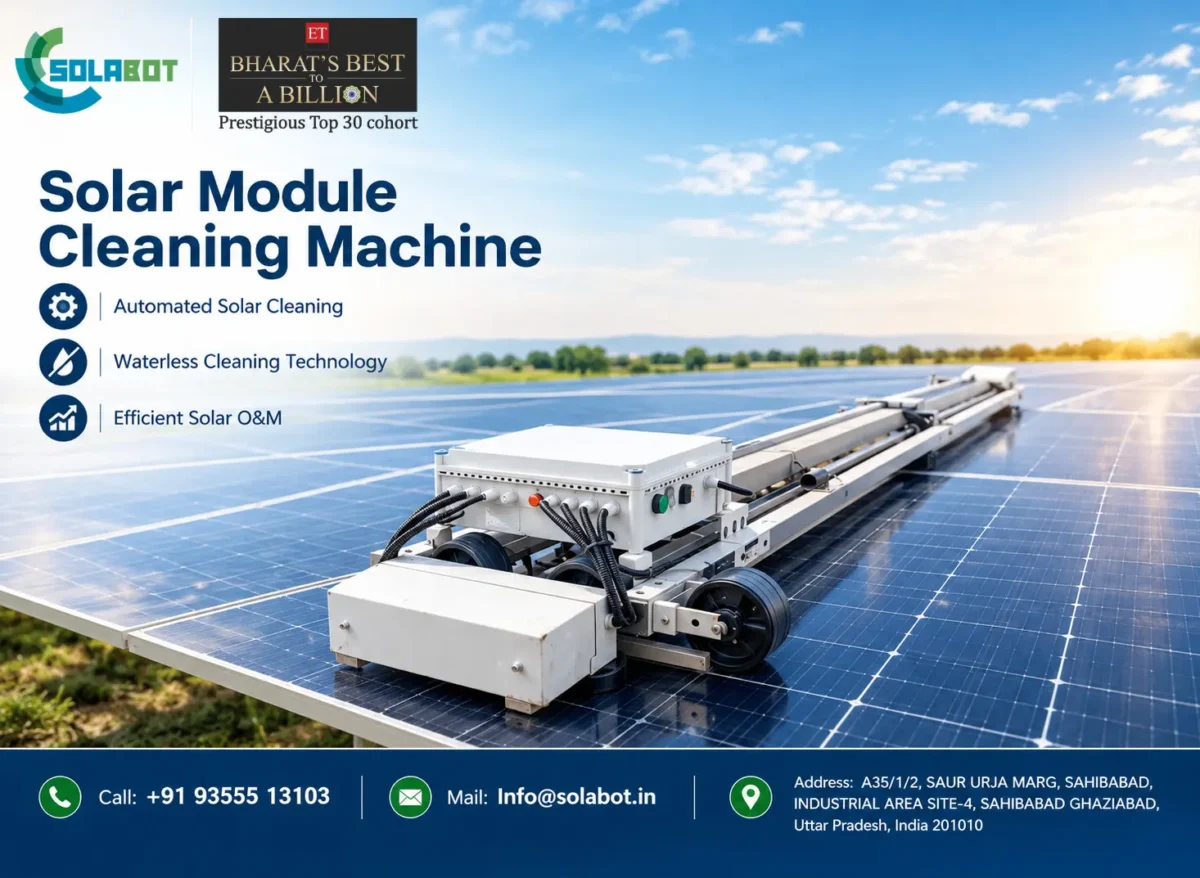
A Solar Panel Dust Cleaning Robot is an automated robotic system designed to remove dust and loose particles from solar panel surfaces. Depending on the system design, these robots can operate automatically or semi-automatically and are developed for different types of solar panel installations.
Many modern robotic solar cleaning systems are designed to support dry cleaning or waterless cleaning. This is especially useful for solar power plants located in water-scarce regions.
A robotic solar cleaning system may include features such as:
- Automated movement across solar panels
- Dry brush or specialized cleaning mechanisms
- Remote operation or monitoring
- Rechargeable battery systems
- Automatic charging capabilities
- Compatibility with different panel configurations
- Advanced safety features
- Reduced manual intervention
The exact features and operating method depend on the specific robotic model and the requirements of the solar installation.
How Does a Solar Panel Dust Cleaning Robot Work?
The operation of a Solar Panel Dust Cleaning Robot is designed to be simple, efficient, and suitable for routine solar maintenance.
First, the robot is positioned on the solar panel structure or designated operating area. Depending on the model, it may move across the panel surface using wheels, tracks, or specialized mechanisms designed to maintain stability.
As the robot moves, its cleaning system removes dust and loose contaminants from the panel surface. Dry cleaning technology can help eliminate the need for large quantities of water, making it a practical solution for solar installations located in dry and water-stressed regions.
After completing the cleaning cycle, the robot may return to a designated position or charging station, depending on the system configuration. Automated or semi-automated operation can help reduce the amount of manual work required from maintenance teams.
Why Waterless Solar Panel Cleaning Is Becoming More Important
Solar energy is often installed in areas with high solar radiation, which can include dry and water-scarce regions. Unfortunately, these same areas can also experience high levels of dust and sand accumulation.
This creates a major maintenance challenge: solar panels need frequent cleaning, but water may not always be easily available.
Waterless solar panel cleaning technology offers an alternative approach. Instead of relying heavily on water, dry cleaning robots can use specialized mechanisms to remove dust from the panel surface.
The benefits of waterless cleaning include:
- Reduced water consumption
- Lower transportation requirements for water
- Less dependence on water tankers
- Reduced cleaning-related wastewater
- Better suitability for dry regions
- More sustainable solar plant maintenance
As solar power capacity continues to expand globally, water-efficient maintenance technologies are likely to become increasingly important.
Solabot Technologies Pvt. Ltd.: Advancing Robotic Solar Panel Cleaning
Solabot Technologies Pvt. Ltd. is focused on developing advanced robotic solutions for solar panel cleaning and maintenance. The company works toward addressing some of the key challenges faced by solar power plant operators, including dust accumulation, water consumption, manual labor requirements, and the need for efficient maintenance.
Its robotic solar cleaning solutions are designed to support different solar installation requirements. Product-specific robotic solutions can be developed for automatic cleaning, semi-automatic operation, and solar tracker applications.
The company focuses on combining automation with practical solar maintenance requirements. By developing robotic solutions for solar panel cleaning, Solabot Technologies aims to support the growing renewable energy industry and help solar plant operators improve their maintenance processes.
How to Choose the Right Solar Panel Dust Cleaning Robot
Before selecting a robotic cleaning solution, solar plant operators should evaluate several factors.
- Panel Configuration
Different solar installations may use different panel layouts and mounting structures. The cleaning robot should be compatible with the specific configuration of the solar modules.
- Cleaning Requirements
The level and type of soiling should be considered. A location with fine dust may have different cleaning requirements than a region with sand, pollen, or heavy industrial pollution.
- Water Availability
If the solar plant is located in a water-scarce region, a dry or waterless cleaning robot may offer significant operational advantages.
- Automation Level
Some solar plant operators may require fully automatic operation, while others may prefer semi-automatic or portable cleaning systems.
- Solar Tracker Compatibility
Solar installations using tracking systems may require specialized robotic solutions designed for tracker-mounted panels.
- Maintenance and Support
A robotic cleaning system should be supported by appropriate maintenance, technical assistance, and spare parts availability to ensure reliable long-term operation.
Solar Panel Dust Cleaning Robot vs Manual Cleaning
Manual cleaning remains common in many solar installations. However, it can involve several challenges:
- High labor requirements
- Repetitive work
- Variable cleaning quality
- Safety concerns
- Higher operational effort
- Difficulties in cleaning large solar farms
A robotic system can help address many of these challenges by automating repetitive cleaning operations.
However, the best solution depends on the size of the installation, site conditions, budget, panel layout, and operational requirements. In many cases, robotic cleaning can complement existing maintenance teams rather than completely replace human supervision.
The Future of Robotic Solar Panel Cleaning
The future of solar panel maintenance is expected to become increasingly automated. As solar power plants grow larger, operators will need efficient technologies capable of managing large-scale maintenance requirements.
Future robotic cleaning systems may include advanced features such as:
- Artificial intelligence
- Remote monitoring
- IoT connectivity
- Automated scheduling
- Smart navigation
- Solar plant data integration
- Advanced obstacle detection
- Improved battery technology
- Automated charging systems
These technologies can help create more intelligent and efficient solar plant maintenance operations.
The growing demand for renewable energy is also creating opportunities for companies developing innovative solar automation solutions. Robotic cleaning technology can play an important role in supporting the long-term performance and sustainability of solar power installations.
Why Choose Solabot Technologies Pvt. Ltd.?
Choosing the right technology partner is important for solar companies, EPC contractors, solar plant owners, and operations and maintenance service providers.
Solabot Technologies Pvt. Ltd. focuses on developing innovative robotic solutions for solar panel cleaning. The company understands that different solar installations have different operational requirements.
With a focus on robotic automation and dry cleaning technology, Solabot aims to deliver practical solutions for:
- Solar power plant operators
- Solar EPC companies
- Solar O&M companies
- Utility-scale solar projects
- Commercial solar installations
- Industrial solar projects
- Solar tracker installations
By adopting advanced robotic cleaning technology, solar plant operators can work toward more efficient, sustainable, and scalable maintenance operations.
Conclusion
Dust accumulation is one of the important maintenance challenges faced by solar power plants around the world. Regular cleaning is essential for maintaining a clean panel surface and supporting efficient solar energy generation. However, traditional cleaning methods can require significant water, labor, time, and operational resources.
A Solar Panel Dust Cleaning Robot offers a modern alternative for automated and efficient solar panel maintenance. With the ability to support dry and waterless cleaning, robotic systems can help reduce water dependence while improving cleaning efficiency and reducing repetitive manual work.
Solabot Technologies Pvt. Ltd. is contributing to the development of advanced robotic solar panel cleaning solutions for modern solar installations. By combining automation, robotics, and sustainable cleaning technology, the company is helping move solar panel maintenance toward a smarter and more efficient future.
For solar power plant owners, EPC companies, and solar maintenance professionals looking for innovative cleaning technology, robotic solar panel cleaning solutions can be an important step toward improving operational efficiency and supporting sustainable solar energy production.